

Introduction
Customs Clearance in the UAE is one of the most critical stages of international shipping, ensuring that imported and exported goods comply with UAE customs regulations while moving efficiently through customs checkpoints. Whether you’re importing commercial products, exporting goods, or managing international logistics, understanding the Customs Clearance Process in the UAE helps minimize delays, avoid unnecessary costs, and ensure full compliance with local regulations.
As the UAE continues to strengthen its position as a global trade and logistics hub, businesses and individuals must stay informed about the latest UAE customs procedures, documentation requirements, customs duties, and clearance regulations. Proper preparation not only speeds up cargo release but also reduces the risk of penalties and shipment delays.
In this comprehensive guide, you’ll learn everything you need to know about Customs Clearance in the UAE, including the required documents, customs procedures, applicable duties, common challenges, expert tips for faster clearance, and the key differences between import and export customs clearance.
Table of Contents
What Is Customs Clearance in the UAE?
Customs Clearance in the UAE refers to the legal and administrative process required for importing or exporting goods through UAE customs authorities. This process ensures that all shipments comply with national customs laws, import and export regulations, and security requirements before they are released.
The UAE customs clearance process typically involves document verification, customs declaration, cargo inspection (when required), customs duty assessment, and final approval for cargo release. Completing these procedures accurately helps businesses avoid costly delays while ensuring smooth international trade operations.
Why Is Customs Clearance Important?
Efficient Customs Clearance in the UAE plays a vital role in international shipping and supply chain management. Proper customs procedures help businesses move cargo quickly while maintaining full compliance with UAE regulations.
Key benefits include:
- Ensuring compliance with UAE customs regulations
- Faster release of imported and exported shipments
- Reducing the risk of customs penalties and fines
- Preventing unnecessary shipment delays
- Supporting smooth import and export operations
- Improving international logistics efficiency
- Minimizing operational costs through accurate documentation
Required Documents for Customs Clearance in the UAE
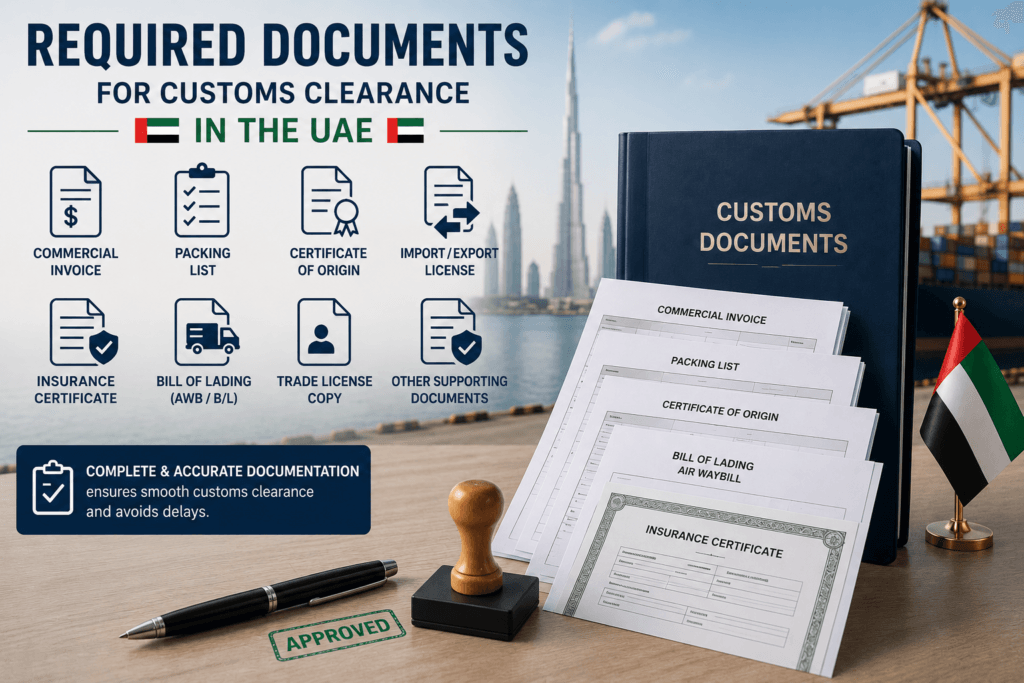
The documents required for Customs Clearance in the UAE vary depending on the shipment type, product category, and destination. However, several essential documents are required for most import and export shipments.
Commercial Invoice
The commercial invoice provides detailed information about the seller, buyer, product description, quantity, unit price, and total shipment value. It serves as one of the primary documents used to calculate customs duties.
Packing List
A packing list outlines the number of packages, weight, dimensions, and contents of the shipment, making customs inspections faster and more accurate.
Bill of Lading or Air Waybill
The Bill of Lading (B/L) for sea freight or Air Waybill (AWB) for air freight acts as proof of shipment and transportation between the exporter and importer.
Certificate of Origin
This document identifies the country where the goods were manufactured or produced and may affect customs duties or eligibility under trade agreements.
Import or Export Permits
Certain goods, including food products, pharmaceuticals, chemicals, medical equipment, and controlled items, require additional permits issued by the relevant UAE authorities before customs clearance can be completed.
Step-by-Step Customs Clearance Process in the UAE
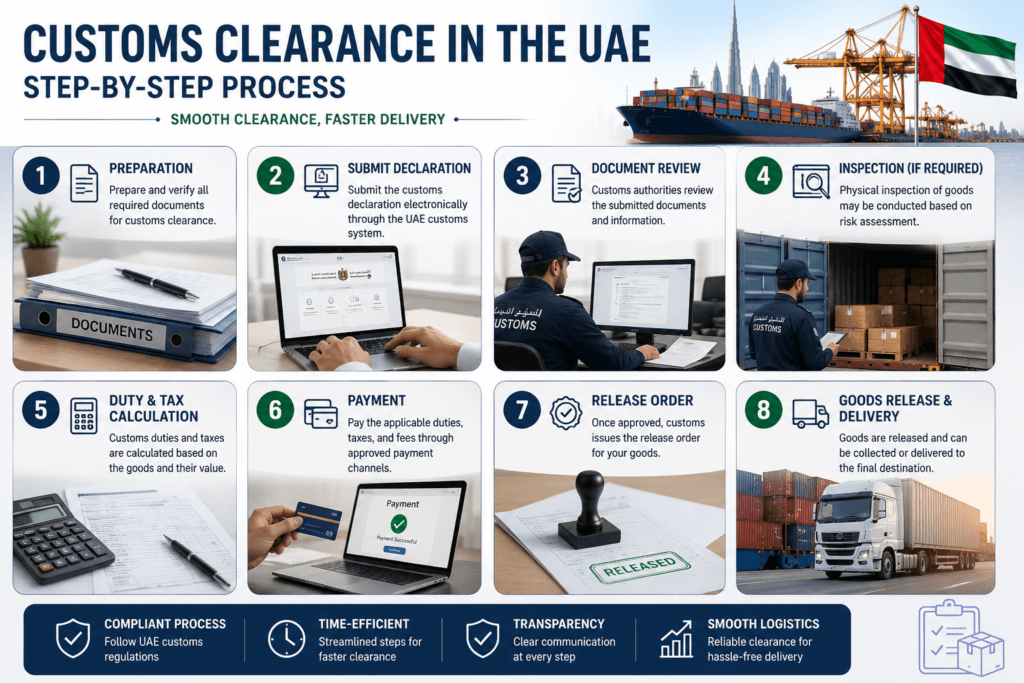
The Customs Clearance Process in the UAE follows a structured sequence of legal and administrative procedures designed to ensure that imported and exported goods comply with all applicable customs regulations. Completing each step accurately helps businesses avoid unnecessary delays and facilitates the smooth release of shipments.
1. Prepare All Required Documents
Before your shipment arrives at the UAE port, airport, or land border, ensure that all required customs documents are complete and accurate. Missing or incorrect paperwork is one of the leading causes of customs delays.
2. Submit the Customs Declaration
The shipment details are electronically submitted through the UAE customs system. This declaration includes information about the importer or exporter, shipment value, commodity classification, country of origin, and transportation method.
3. Document Verification
Customs authorities review all submitted documentation to verify that the shipment complies with UAE customs regulations and import or export requirements.
4. Customs Duty Assessment
The applicable customs duties and taxes are calculated based on the shipment’s value, HS code classification, product category, and current UAE customs regulations.
5. Customs Inspection
Some shipments may be selected for physical inspection or scanning to verify that the declared information matches the actual cargo.
6. Payment of Customs Duties
Once the customs assessment is completed, the importer or customs broker pays any applicable duties, taxes, or administrative fees before cargo release.
7. Cargo Release
After completing all customs procedures, the shipment receives official clearance and can be collected or delivered to its final destination.
Common Reasons for Customs Clearance Delays
Although the UAE has one of the world’s most efficient customs systems, shipments may still experience delays due to documentation errors or regulatory requirements.
The most common reasons include:
- Incomplete customs documentation
- Incorrect customs declaration
- Errors in the commercial invoice
- Missing import or export permits
- Delayed customs duty payment
- Cargo selected for additional inspection
- Incorrect HS code classification
- Differences between shipment contents and submitted documents
Tips to Speed Up Customs Clearance
Businesses can significantly reduce customs clearance delays by following several best practices.
- Verify all shipping documents before submission.
- Ensure customs declarations are accurate and complete.
- Obtain all required permits before shipping.
- Work with an experienced customs clearance company.
- Monitor shipment status throughout the customs process.
- Respond quickly to any customs inquiries.
- Classify goods correctly using the appropriate HS codes.
- Prepare all supporting documents before cargo arrival.
Import vs. Export Customs Clearance in the UAE
Although both import and export customs clearance follow similar regulatory principles, each process involves different documentation requirements and customs procedures.
Import Customs Clearance
Import customs clearance applies when goods enter the UAE from another country. Customs authorities review shipment documents, assess applicable customs duties, verify regulatory compliance, and approve cargo release once all requirements have been met.
Export Customs Clearance
Export customs clearance applies when goods leave the UAE for international destinations. The process focuses on verifying export documentation, ensuring compliance with destination-country regulations, and issuing the necessary customs approvals before shipment departure.
Key Differences
- Import shipments may require customs duty payment.
- Export shipments focus on export documentation and destination-country requirements.
- Permit requirements vary depending on the product category.
- Regulatory procedures differ according to the responsible government authority.
- Understanding these differences helps businesses streamline international shipping operations and reduce customs-related delays.
Customs Duties in the UAE
Customs duties in the UAE vary depending on several factors, including the type of goods, customs classification, shipment value, and applicable trade agreements. While many imported products are subject to standard customs duties, certain goods may qualify for exemptions or reduced tariffs under specific regulations.
To avoid unexpected costs, businesses should verify the estimated customs duties before importing or exporting goods.
Common Customs Clearance Mistakes in the UAE
Even minor mistakes during the Customs Clearance in the UAE process can lead to shipment delays, additional costs, or customs penalties. Understanding and avoiding these common errors helps businesses streamline import and export operations while ensuring compliance with UAE customs regulations.
Submitting Incomplete Documentation
Missing or incomplete customs documents are among the most common reasons shipments are delayed. Always verify that all required paperwork is complete before submitting your customs declaration.
Errors in the Commercial Invoice
Incorrect product descriptions, inaccurate shipment values, or inconsistent buyer and seller information can trigger additional customs reviews and delay cargo release.
Incorrect HS Code Classification
Using the wrong Harmonized System (HS) code may result in incorrect customs duties, compliance issues, or shipment inspections. Proper product classification is essential for smooth customs clearance.
Failure to Obtain Required Permits
Certain products, including food, pharmaceuticals, chemicals, cosmetics, and medical equipment, require approvals from the relevant UAE authorities. Failing to obtain these permits before shipping can result in cargo being held at customs.
Delayed Payment of Customs Duties
Late payment of customs duties or other applicable fees can postpone the release of your shipment and may lead to additional storage or administrative charges.
Not Working with an Experienced Customs Clearance Provider
Partnering with a professional customs clearance company minimizes errors, ensures regulatory compliance, and helps businesses complete customs procedures more efficiently.
Why Choose Golden Ocean for Customs Clearance Services?
Golden Ocean provides comprehensive Customs Clearance in the UAE and international logistics solutions tailored to businesses of all sizes. Our experienced team manages every stage of the customs clearance process, ensuring that shipments move quickly, efficiently, and in full compliance with UAE customs regulations.
Our customs clearance services include:
- Commercial customs clearance services
- Import and export customs documentation
- Customs declaration processing
- Cargo tracking and customs follow-up
- Preparation and verification of shipping documents
- Sea freight, air freight, and road freight solutions
- Dedicated customer support throughout the shipping process
Contact the Golden Ocean Team
If you’re looking for a reliable logistics partner to manage your Customs Clearance in the UAE and international shipping requirements, Golden Ocean is here to help.
Our customs specialists provide expert guidance, accurate documentation, and end-to-end customs support to ensure your shipments are cleared quickly and efficiently.
Contact us today to learn more about our customs clearance and freight forwarding services and receive a customized shipping solution that fits your business needs.
Conclusion
Customs Clearance in the UAE is a critical part of successful international trade, helping businesses import and export goods efficiently while complying with UAE customs regulations. By understanding the customs clearance process, preparing the required documents, avoiding common mistakes, and partnering with an experienced customs clearance provider, companies can reduce delays, minimize costs, and improve supply chain performance.
Whether you’re shipping commercial goods, industrial equipment, or personal cargo, Golden Ocean offers professional customs clearance solutions designed to simplify every stage of the import and export process.
Frequently Asked Questions
How long does Customs Clearance in the UAE take?
The customs clearance process can take anywhere from a few hours to several business days, depending on the shipment type, documentation accuracy, customs inspections, and regulatory requirements.
What documents are required for Customs Clearance in the UAE?
The most commonly required documents include the Commercial Invoice, Packing List, Bill of Lading or Air Waybill, Certificate of Origin, Customs Declaration, and any additional permits required for regulated products.
Do customs duties vary depending on the type of goods?
Yes. Customs duties are determined by factors such as product classification, customs value, country of origin, and applicable UAE customs regulations.
How can I avoid customs clearance delays?
You can reduce delays by preparing accurate shipping documents, submitting complete customs declarations, obtaining all necessary permits in advance, paying customs duties on time, and working with an experienced customs clearance company.
Can Golden Ocean handle both import and export customs clearance?
Yes. Golden Ocean provides complete customs clearance solutions for both import and export shipments, along with sea freight, air freight, road freight, and end-to-end logistics services for businesses and individuals.