

Table of Contents
Introduction
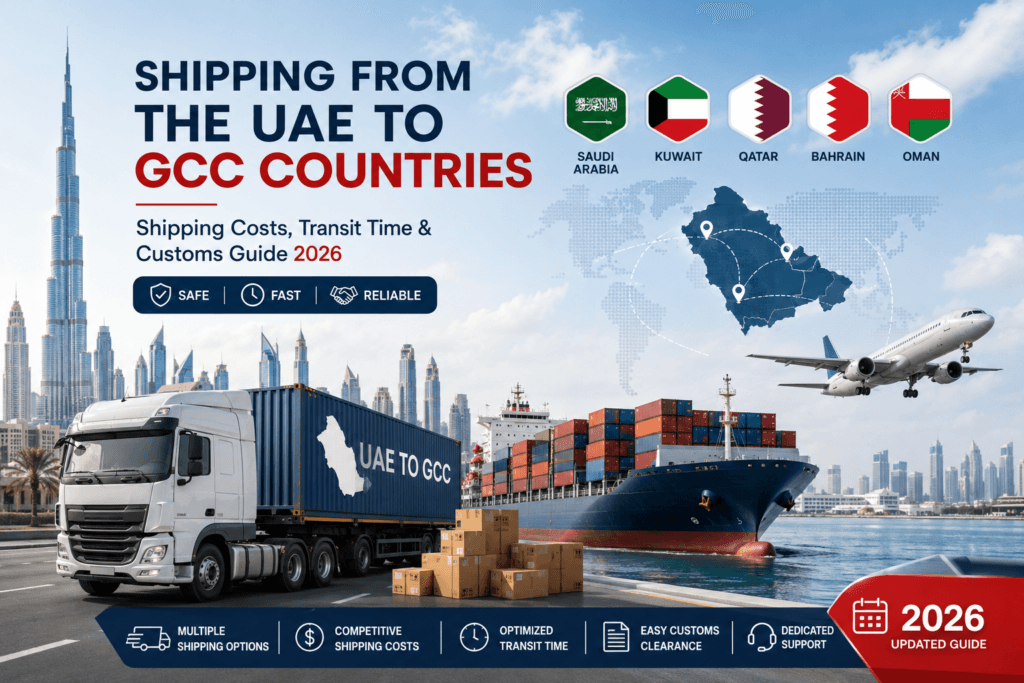
Shipping from UAE to GCC Countries is one of the most important logistics services in the Middle East, as the United Arab Emirates serves as a major hub for trade and transportation across Saudi Arabia, Kuwait, Qatar, Bahrain, and Oman.
Whether you’re transporting commercial goods, industrial equipment, retail products, or personal belongings, choosing the right shipping solution can significantly reduce costs, shorten delivery times, and ensure smooth customs clearance. Every shipment has unique requirements, making it important to understand the available transportation methods, required documentation, pricing factors, and transit times before shipping.
In this comprehensive 2026 guide, you’ll discover everything you need to know about shipping from the UAE to GCC countries, including the best shipping methods, estimated delivery times, customs procedures, shipping costs, and practical tips to optimize your logistics operations.
The UAE’s strong trade relationships are supported by the Gulf Cooperation Council (GCC) framework, which facilitates economic cooperation among Gulf countries.
Why Ship from the UAE to GCC Countries?
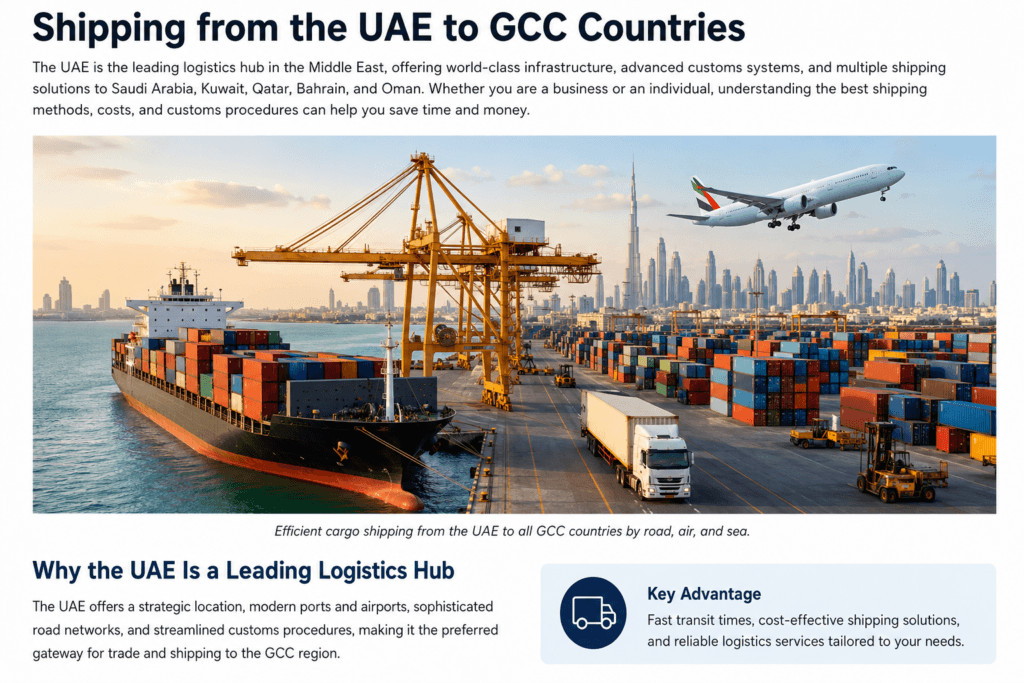
The UAE has earned its reputation as one of the Middle East’s leading logistics and freight hubs. Its advanced transportation network and strong trade relationships with neighboring Gulf countries make cross-border shipping faster and more efficient than ever.
Today, thousands of shipments leave the UAE every day, serving businesses across multiple industries, including retail, healthcare, construction, manufacturing, automotive, food distribution, and e-commerce. Companies benefit from reliable transportation networks that connect major cities and industrial zones throughout the Gulf Cooperation Council (GCC).
As regional trade continues to grow, shipping companies in the UAE provide flexible logistics solutions designed to meet different budgets, cargo types, and delivery schedules.
Why Is the UAE the Leading Logistics Hub in the Gulf?
Several competitive advantages have positioned the UAE as the preferred logistics gateway for GCC trade.
Strategic Geographic Location
Situated between Asia, Europe, and Africa, the UAE provides direct access to every GCC country through well-developed land, sea, and air transportation networks. This strategic location helps businesses reduce transit times while improving supply chain efficiency.
World-Class Seaports
The UAE operates some of the world’s busiest and most advanced commercial ports, handling millions of containers annually. These facilities support international trade while offering efficient cargo handling, container storage, and customs processing.
Customs operations at UAE ports are regulated by the Federal Authority for Identity, Citizenship, Customs & Port Security (ICP).
International Airports
Major airports across the UAE offer extensive air cargo services with connections to hundreds of global destinations. This makes air freight an ideal option for urgent, high-value, and time-sensitive shipments.
Air cargo operations comply with international standards established by the International Air Transport Association (IATA).
Modern Highway Network
A highly developed road infrastructure connects the UAE directly with Saudi Arabia and provides efficient access to Kuwait, Bahrain, Qatar, and Oman through regional transport corridors. Road freight remains the preferred option for many commercial shipments due to its flexibility and competitive pricing.
Advanced Customs Systems
Digital customs platforms and streamlined border procedures help reduce paperwork and speed up cargo clearance, minimizing delays at border checkpoints.
Free Zones Supporting International Trade
The UAE’s numerous free zones simplify import, export, storage, and distribution activities while providing businesses with attractive tax and operational advantages.
Together, these strengths make the UAE one of the most reliable logistics hubs for businesses shipping throughout the GCC region.
Shipping Methods from the UAE to GCC Countries
Selecting the most suitable shipping method depends on several factors, including shipment size, cargo type, delivery deadline, and transportation budget. The UAE offers three primary freight solutions.
Road Freight
Road freight is the most widely used shipping method between GCC countries because of the region’s interconnected highway network and shared land borders. It is particularly suitable for commercial cargo, retail products, industrial equipment, and palletized shipments.
Advantages
- Cost-effective for most commercial shipments.
- Flexible door-to-door delivery services.
- Ideal for medium and large cargo volumes.
- Easy shipment tracking throughout transit.
- Regular scheduled departures.
Disadvantages
- Border inspections may occasionally extend delivery times.
- Slower than air freight for urgent shipments.
Road transportation is often the best balance between affordability and delivery speed for regional trade.
Air Freight
Air freight is the fastest shipping option available for cargo traveling from the UAE to GCC destinations. It is commonly used for urgent deliveries, medical supplies, electronics, luxury products, and high-value goods.
Advantages
- Fastest transit times.
- High cargo security.
- Reliable flight schedules.
- Ideal for time-sensitive shipments.
- Excellent for e-commerce fulfillment.
Disadvantages
- Higher transportation costs.
- Weight and size restrictions may apply.
Although more expensive than road transport, air freight provides unmatched speed and reliability when delivery deadlines are critical.
Sea Freight
Sea freight is the preferred solution for oversized cargo, heavy machinery, construction materials, and bulk commercial shipments. While transit times are longer, it offers significant cost savings for large-volume freight.
Advantages
- Most economical for heavy cargo.
- Suitable for full container (FCL) and shared container (LCL) shipments.
- Excellent for industrial and commercial projects.
- Lower transportation cost per unit.
Disadvantages
- Longest delivery time.
- Dependent on shipping schedules and port operations.
For businesses transporting large quantities of goods, sea freight remains the most cost-effective logistics solution.
Shipping Methods Comparison
| Shipping Method | Delivery Speed | Cost | Best For |
|---|---|---|---|
| Road Freight | Medium | Low | Commercial goods, retail products, palletized cargo |
| Air Freight | Very Fast | High | Urgent shipments, electronics, medical supplies, e-commerce |
| Sea Freight | Slow | Economical | Heavy machinery, bulk cargo, industrial equipment |
Each shipping method offers unique advantages, and the best option depends on your shipment’s size, urgency, destination, and budget.
Shipping Costs from the UAE to GCC Countries (2026)
One of the most common questions businesses and individuals ask is, “How much does shipping from the UAE to GCC countries cost?” The answer depends on several factors, including the shipment’s weight, dimensions, destination, transportation method, customs requirements, and any additional logistics services requested.
Road freight generally offers the best balance between affordability and transit time for neighboring GCC countries. Air freight is the preferred option for urgent deliveries, while sea freight provides the most economical solution for large-volume and heavy cargo.
Although shipping rates vary between logistics providers, understanding the factors that influence pricing can help you estimate transportation costs and choose the most cost-effective solution.
Estimated Shipping Costs by Destination
The following table provides general shipping cost ranges for commercial shipments. Actual rates may vary depending on cargo specifications and market conditions.
| Destination | Road Freight | Air Freight | Sea Freight |
|---|---|---|---|
| Saudi Arabia | Economical | High | Available for large shipments |
| Oman | Economical | High | Available |
| Bahrain | Moderate | High | Available |
| Qatar | Moderate | High | Available |
| Kuwait | Moderate | High | Available |
Note: Shipping costs may increase for oversized cargo, hazardous materials, temperature-controlled goods, or express delivery services. Contact your logistics provider for an accurate quotation based on your shipment details.
Estimated Transit Time from the UAE to GCC Countries
Transit time is another important factor when planning shipments. Delivery schedules depend on the selected shipping method, customs clearance, border procedures, weather conditions, and final destination.
The following estimates represent average transit times under normal operating conditions.
| Destination | Road Freight | Air Freight | Sea Freight |
| Saudi Arabia | 1–3 Days | Same Day–1 Day | 4–7 Days |
| Oman | 1–2 Days | Same Day | 3–5 Days |
| Bahrain | 2–4 Days | 1 Day | 5–8 Days |
| Qatar | 2–5 Days | 1 Day | 5–9 Days |
| Kuwait | 3–5 Days | 1 Day | 6–10 Days |
Express shipping services are available for customers who require faster delivery for urgent or high-priority shipments.
Factors That Affect Shipping Costs
Shipping prices vary from one shipment to another. Understanding the main pricing factors allows businesses to better plan logistics budgets and avoid unexpected expenses.
Shipment Weight and Volume
Carriers calculate shipping charges using either the actual weight or the volumetric weight of the shipment. Lightweight but bulky cargo may incur higher transportation costs because it occupies more space.
Destination Country
Transportation costs differ depending on the distance, border crossings, fuel prices, and local logistics infrastructure in each GCC country.
Shipping Method
Road freight is generally the most economical solution for regional transportation.
Air freight offers the fastest delivery but comes with higher shipping rates.
Sea freight provides excellent value for large commercial shipments but requires longer transit times.
Cargo Type
Certain products require special handling, including:
- Fragile goods
- Medical equipment
- Food products
- Dangerous goods
- Temperature-controlled cargo
- Oversized machinery
These shipments often involve additional handling or regulatory requirements.
Customs Clearance
Import duties, customs inspections, and documentation requirements may influence the overall shipping cost depending on the destination country’s regulations.
Additional Logistics Services
Extra services can increase the final shipping price, including:
- Door-to-door delivery
- Cargo insurance
- Warehousing and storage
- Professional packing
- Customs brokerage
- Shipment tracking
- Express delivery
Choosing only the services you need can help optimize your logistics expenses.
Required Shipping Documents
Preparing the correct documentation before shipping helps prevent customs delays and ensures a smooth transportation process.
Most shipments from the UAE to GCC countries require the following documents.
Commercial Invoice
A commercial invoice includes essential shipment details such as:
- Seller and buyer information
- Product descriptions
- Quantity
- Unit value
- Total shipment value
- Country of origin
This document is required for customs valuation and duty assessment.
Packing List
The packing list provides detailed information about the shipment contents, including:
- Number of packages
- Dimensions
- Gross and net weight
- Packaging type
It allows customs authorities and logistics providers to verify shipment contents quickly.
Certificate of Origin
Certain products require a Certificate of Origin to verify where the goods were manufactured. This document may also help importers qualify for preferential tariff agreements where applicable.
Bill of Lading or Air Waybill
Depending on the transportation method, the shipment will require:
- Bill of Lading (Sea Freight)
- Air Waybill (Air Freight)
- Road Consignment Note (Road Freight)
These transport documents serve as proof of shipment and outline the carrier’s responsibilities.
Import Permits
Some products—including pharmaceuticals, chemicals, food items, and telecommunications equipment—may require import licenses or approvals before entering the destination country.
Preparing all required documents in advance significantly reduces the risk of customs delays and additional charges.
Customs Clearance Procedures
Customs clearance is one of the most important stages of international shipping. Efficient customs processing ensures that shipments move quickly across GCC borders while complying with local import regulations.
A standard customs clearance process usually involves the following steps:
- Submission of shipping documents.
- Customs declaration.
- Cargo inspection (if required).
- Payment of customs duties and applicable taxes.
- Final customs approval.
- Cargo release and delivery.
Working with an experienced freight forwarding company helps simplify customs procedures and minimizes delays at border checkpoints.
Internal Link: Add a link here to your Customs Clearance Services in the UAE article.
Prohibited and Restricted Items
Although regulations vary slightly between GCC countries, certain products are generally prohibited or require special approval before shipment.
Examples include:
- Hazardous chemicals
- Explosives
- Firearms and ammunition
- Counterfeit goods
- Narcotic substances
- Certain pharmaceutical products
- Live animals (without permits)
- Agricultural products requiring inspection
- Restricted telecommunications equipment
Before shipping specialized cargo, always verify the latest import regulations for the destination country to ensure full compliance with customs requirements.
How to Choose the Right Shipping Company
Choosing the right logistics partner is one of the most important decisions for businesses and individuals shipping goods across the GCC. A reliable shipping company not only ensures timely deliveries but also helps minimize transportation costs, simplify customs procedures, and protect your cargo throughout the shipping process.
When comparing shipping providers, consider the following factors:
Industry Experience
Choose a company with proven experience in shipping from the UAE to GCC countries. An experienced logistics provider understands customs regulations, border procedures, and the most efficient shipping routes.
Comprehensive Shipping Solutions
A professional freight company should offer multiple transportation options, including:
- Road freight
- Air freight
- Sea freight
- Door-to-door delivery
- Customs clearance
- Warehousing and distribution
- Cargo insurance
Having all services under one provider simplifies logistics management and reduces coordination efforts.
Transparent Pricing
Look for companies that provide detailed quotations without hidden charges. A clear pricing structure allows you to estimate shipping expenses accurately and plan your logistics budget with confidence.
Shipment Tracking
Real-time shipment tracking enables you to monitor your cargo throughout the transportation process, providing greater visibility and peace of mind.
Customer Support
Responsive customer service is essential, especially for international shipments. A reliable logistics partner should provide timely updates and assistance whenever needed.
Tips to Reduce Shipping Costs
Shipping expenses can represent a significant portion of operational costs. Fortunately, there are several strategies to optimize your logistics budget without compromising service quality.
Consolidate Shipments
Combining multiple smaller shipments into a single larger shipment can significantly reduce transportation costs.
Choose the Right Shipping Method
Road freight is usually the most economical solution for GCC destinations, while air freight should be reserved for urgent or high-value cargo.
Optimize Packaging
Using appropriately sized packaging reduces volumetric weight and minimizes shipping charges while protecting the cargo during transit.
Prepare Documentation in Advance
Incomplete or inaccurate shipping documents can lead to customs delays, storage fees, and additional administrative costs.
Plan Shipments Early
Booking transportation in advance often provides more scheduling flexibility and competitive freight rates, particularly during peak shipping seasons.
Work with an Experienced Logistics Provider
An experienced freight forwarding company can recommend the most efficient shipping routes, optimize customs clearance, and identify cost-saving opportunities.
Why Choose Golden Ocean for Shipping from the UAE to GCC Countries?
At Golden Ocean, we provide comprehensive logistics solutions designed to meet the needs of businesses and individuals across the Gulf region.
Our experienced logistics team manages every stage of the shipping process—from pickup and packaging to customs clearance and final delivery—ensuring that your cargo arrives safely and on time.
Our services include:
- Road Freight Services
- Air Freight Services
- Sea Freight Services
- Door-to-Door Delivery
- Customs Clearance
- Commercial Cargo Shipping
- Personal Effects Shipping
- Warehousing & Distribution
- Cargo Insurance
- Real-Time Shipment Tracking
Whether you’re shipping a single package or managing large-scale commercial freight, our customized logistics solutions help you reduce costs while maintaining reliable delivery schedules.
Contact Us
Need a reliable logistics partner for your next shipment?
Golden Ocean provides fast, secure, and cost-effective shipping solutions from the UAE to all GCC countries. Our logistics specialists are ready to help you choose the best transportation method, prepare the required documentation, and ensure smooth customs clearance.
Frequently Asked Questions (FAQs)
How much does shipping from the UAE to GCC countries cost?
Shipping costs depend on several factors, including the destination country, shipment weight and dimensions, cargo type, transportation method, customs requirements, and additional services such as insurance or door-to-door delivery.
What is the fastest shipping method?
Air freight is the fastest option for shipping from the UAE to GCC countries. Most urgent shipments can be delivered within one day, depending on the destination and flight availability.
Which shipping method is the most economical?
Road freight is generally the most cost-effective choice for most commercial shipments within the GCC, while sea freight offers the lowest cost for heavy and bulk cargo.
Which documents are required for shipping?
The required documentation typically includes:
Commercial Invoice
Packing List
Certificate of Origin (when applicable)
Bill of Lading or Air Waybill
Import permits for restricted goods
Additional documents may be required depending on the destination country and cargo type.
Can I track my shipment?
Yes. Most professional logistics providers offer real-time shipment tracking, allowing customers to monitor their cargo throughout the shipping process.
How long does customs clearance take?
Customs clearance times vary depending on the destination country, shipment type, and documentation. Properly prepared shipments are generally cleared much faster.
Are there items that cannot be shipped?
Yes. Dangerous goods, prohibited substances, counterfeit products, certain pharmaceuticals, weapons, and restricted chemicals may require special approvals or may not be accepted for shipment.
Do you offer door-to-door shipping?
Yes. Door-to-door shipping services are available for most GCC destinations, providing convenient pickup, customs clearance, and final delivery.
Which GCC countries do you serve?
We provide shipping solutions from the UAE to:
Saudi Arabia
Kuwait
Qatar
Bahrain
Oman
using road, air, and sea freight services.
Final Thoughts
Shipping from the UAE to GCC countries has never been more efficient, thanks to the region’s advanced transportation infrastructure, streamlined customs procedures, and reliable logistics networks. Whether you are a business expanding across the Gulf or an individual sending personal belongings, selecting the right shipping partner is essential for ensuring timely deliveries, competitive pricing, and secure cargo handling.
By understanding shipping methods, transit times, customs requirements, and the factors that influence freight costs, you can make informed decisions that improve supply chain efficiency and reduce overall logistics expenses.
Partnering with an experienced logistics company like Golden Ocean gives you access to tailored shipping solutions, expert customs support, and dependable transportation services across Saudi Arabia, Kuwait, Qatar, Bahrain, and Oman.
Ready to ship your cargo? Contact Golden Ocean today to receive a personalized shipping quote and experience reliable logistics solutions designed for businesses and individuals throughout the GCC.