

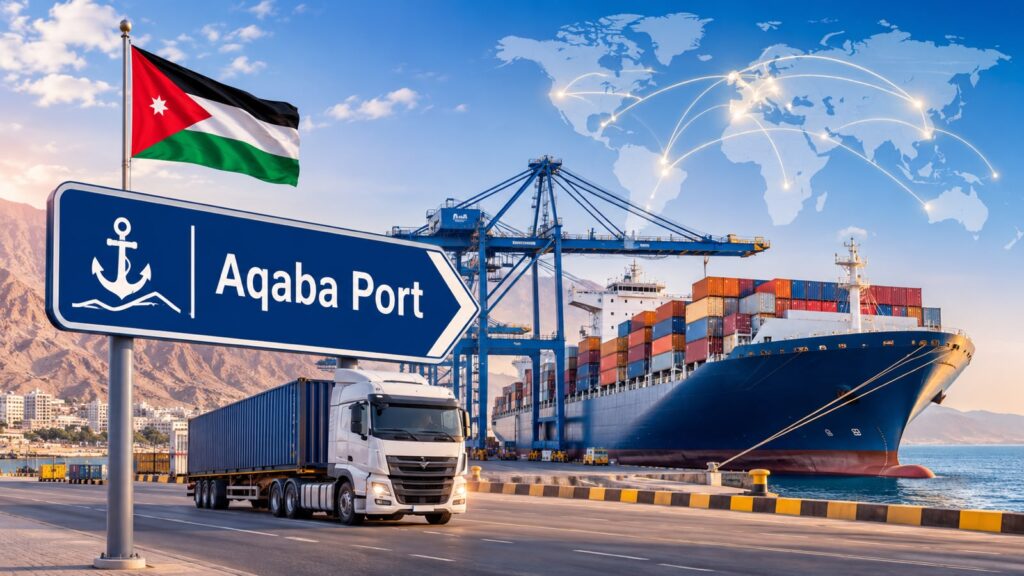
Shipping to Aqaba Port
International shipping is no longer simply about moving cargo from one port to another. For importers, exporters, manufacturers, and logistics companies, choosing the right port has become a strategic business decision that directly affects delivery schedules, transportation costs, inventory planning, and supply chain reliability
As regional trade routes face changing operational conditions, port congestion, vessel scheduling challenges, and increasing pressure on transportation networks, businesses are increasingly looking at alternative gateways that can provide greater flexibility
In this context, shipping to Aqaba Port deserves attention as a strategic option for companies serving Jordan and neighboring markets. Located at the northern end of the Red Sea, Aqaba provides maritime access to Jordan and potential logistics connections to Iraq, Saudi Arabia, the Gulf region, and other nearby markets
However, the importance of shipping to Aqaba Port goes beyond its geographical location. Its value lies in the combination of port infrastructure, cargo handling capabilities, logistics facilities, customs procedures, and road connections that can support different supply chain requirements
This guide explores how shipping to Aqaba Port can contribute to regional logistics planning, when it may serve as an alternative to other ports, what types of cargo can be handled, and which operational factors businesses should evaluate before selecting this route
1. Why Are Businesses Looking for Alternative Shipping Ports?
Global supply chains depend on multiple connected operations. A delay at a major port can affect vessel schedules, container availability, inland transportation, warehouse planning, and the final delivery date
For companies importing large volumes of goods, relying on a single port or shipping route can create operational risks. When congestion increases or shipping schedules become less predictable, businesses may face additional storage charges, demurrage, detention, and unexpected transportation expenses
This is why supply chain diversification has become an important logistics strategy
Instead of depending entirely on one gateway, companies can evaluate alternative ports according to the origin of the cargo, final destination, available shipping services, and inland transportation requirements
Shipping to Aqaba Port can form part of this strategy when the port offers a commercially and operationally suitable connection for the shipment
The objective is not necessarily to replace established ports. It is to create additional routing options that help businesses respond to changing market conditions
A well-planned alternative route can provide:
- Greater flexibility in port selection
- Additional options for cargo routing
- Better contingency planning during disruptions
- More choices for inland transportation
- Improved distribution planning for regional markets
- Reduced dependence on a single logistics gateway
The actual benefits depend on the shipment, shipping line, port conditions, customs requirements, and final delivery location
2. Where Is Aqaba Port Located and Why Is It Important?
Aqaba Port is located in southern Jordan on the Gulf of Aqaba, which connects to the Red Sea and international maritime trade routes
Its geographical position gives Jordan direct access to maritime shipping while creating opportunities for regional cargo movement through road transportation and other logistics services
Aqaba is particularly important because it serves as Jordan’s principal maritime gateway and forms part of a wider logistics network connecting sea, air, and land transportation
According to the Aqaba Development Corporation, the logistics ecosystem includes specialized port facilities, King Hussein International Airport, air cargo services, and regional highway connections. The corporation also identifies Aqaba as a logistics gateway serving Jordan, Iraq, the Gulf, and East Africa
This makes shipping to Aqaba Port relevant not only to companies importing goods into Jordan but also to businesses evaluating regional distribution and transit possibilities
The port’s role should therefore be assessed within the wider logistics network rather than as an isolated maritime destination
3. The Main Strategic Advantages of Shipping to Aqaba Port
The decision to use Aqaba should be based on measurable operational advantages rather than geographical assumptions alone
Several factors make shipping to Aqaba Port worth considering in regional freight planning
A. Access to the Red Sea Shipping Network
Aqaba’s location on the Gulf of Aqaba provides access to the Red Sea maritime corridor, which connects international shipping routes with Jordan
For companies shipping goods from Asia, the Middle East, Africa, or other international markets, the availability of suitable vessel services and transshipment arrangements is an important part of evaluating the route
The most appropriate option depends on the cargo origin, shipping line network, sailing frequency, transit time, and total freight cost
B. Multiple Port and Cargo Facilities
Aqaba is not limited to one type of port operation. Its logistics infrastructure includes container handling facilities, multipurpose port operations, industrial terminals, and cargo support services
The wider port network also includes facilities designed for general cargo, dry bulk, vehicles, and other specialized cargo categories
This diversity is important because different shipments require different handling arrangements, equipment, storage conditions, and operational procedures
C. Connections to Regional Markets
One of the main reasons businesses consider shipping to Aqaba Port is its potential role in serving destinations beyond Jordan
Depending on border conditions, road transport arrangements, customs procedures, and cargo requirements, Aqaba can form part of a wider distribution route toward neighboring markets
The Aqaba Development Corporation identifies Iraq, Saudi Arabia, the Gulf, and East Africa among the markets connected to Aqaba’s logistics ecosystem
However, each destination requires a separate route assessment. The availability of a geographical connection does not automatically mean that a particular shipment can move through it without additional permits, border procedures, or transit arrangements
D. Supporting Multimodal Transportation
Modern logistics operations increasingly depend on combining different transportation methods
A shipment may travel by sea to Aqaba and then continue by truck to its final destination. Other supply chains may combine maritime freight, warehousing, customs clearance, and regional distribution services
This flexibility allows logistics planners to evaluate the entire transportation chain rather than focusing only on the ocean freight rate
For many businesses, the cost and reliability of inland transportation are just as important as the vessel journey
4. Can Shipping to Aqaba Port Replace Congested Regional Ports?
This is one of the most important questions for companies considering alternative shipping routes
The answer depends on the shipment’s origin, destination, cargo type, shipping schedule, and total logistics cost
Aqaba may be a suitable alternative in certain circumstances, particularly when the final destination is Jordan or when a viable inland route connects the port with the receiving market
It may also provide an additional option for businesses seeking to diversify their logistics arrangements and avoid relying entirely on one port
However, it would be inaccurate to assume that Aqaba is always faster, cheaper, or less congested than other regional ports
A proper comparison should consider several factors:
- Vessel availability and sailing frequency
- Ocean freight rates
- Port handling charges
- Expected vessel waiting time
- Container availability
- Customs clearance requirements
- Inland transportation costs
- Border crossing procedures
- Final delivery time
A route that appears cheaper at the port level may become more expensive after adding road transportation, border fees, handling, storage, and other related charges
For this reason, shipping to Aqaba Port should be evaluated as part of a complete door-to-door logistics solution
5. Comparing Aqaba Port with Other Regional Shipping Gateways
Regional ports serve different commercial markets and transportation networks. Their suitability depends on the cargo and the final destination
Aqaba Port
Aqaba is particularly relevant for shipments destined for Jordan and selected regional markets that can be reached through established inland transportation arrangements
Its combination of container facilities, multipurpose operations, and logistics support infrastructure makes it an option worth evaluating for regional freight planning
Jeddah Islamic Port
Jeddah is an important maritime gateway for western Saudi Arabia and a major point of entry for cargo destined for the Kingdom
For shipments with final destinations in Saudi Arabia, Jeddah may offer a more direct logistics solution depending on the shipping service and delivery location
Jebel Ali Port
Jebel Ali in Dubai is a major international logistics and transshipment hub serving the UAE and wider regional markets
It is often relevant for shipments requiring access to the UAE’s distribution infrastructure or connections to international shipping networks
Khalifa Port
Khalifa Port in Abu Dhabi is an important part of the UAE’s maritime and industrial logistics infrastructure
Its suitability depends on the shipment’s destination, cargo requirements, available services, and inland delivery arrangements
King Abdulaziz Port in Dammam
Dammam is a key maritime gateway for eastern Saudi Arabia and may be suitable for cargo destined for the eastern and central parts of the Kingdom
How Should Businesses Compare These Ports?
There is no universal ranking that applies to every shipment
The best port is the one that provides the most suitable combination of freight cost, transit time, handling capabilities, customs procedures, and final-mile transportation
For a shipment destined for Amman, for example, shipping to Aqaba Port may be worth comparing against other available routes based on the complete inland delivery cost
For cargo destined for Dubai or Riyadh, a different port may provide a more practical solution
The correct decision should always be based on the actual destination and shipment details
6. What Types of Cargo Can Be Shipped Through Aqaba?
The port infrastructure in Aqaba supports several cargo categories, making it relevant to different commercial and industrial sectors
Containerized Cargo
Container shipping is suitable for a wide range of commercial goods, including:
- Consumer products
- Industrial supplies
- Electrical equipment
- Furniture
- Building materials
- Machinery and spare parts
- Retail and wholesale merchandise
Depending on the cargo volume and shipping requirements, businesses can evaluate Full Container Load (FCL) or Less than Container Load (LCL) services
General Cargo
General cargo may include goods that are not transported in standard containers or require specific handling arrangements
The appropriate handling method depends on cargo dimensions, weight, packaging, and port equipment availability
Vehicles and Ro-Ro Cargo
Vehicles can be transported through specialized shipping arrangements, including Roll-on/Roll-off services where available
This option may be suitable for cars, commercial vehicles, and other wheeled equipment
Before booking, the shipper should verify the applicable vehicle import regulations, documentation requirements, and customs procedures
Heavy Equipment and Project Cargo
Industrial machinery, construction equipment, oversized cargo, and project materials may require specialized transportation planning
These shipments often involve detailed coordination between the shipping company, port operator, customs authorities, transport providers, and the final receiving site
Dimensions, lifting points, cargo weight, securing arrangements, and inland route restrictions should be evaluated before shipment
Bulk Cargo
Aqaba’s port system also includes facilities designed for bulk commodities and industrial cargo
The appropriate terminal depends on the commodity, handling requirements, and applicable operating arrangements
7. How Does the Shipping Process to Aqaba Port Work?
Successful shipping to Aqaba Port requires coordination across several stages
Understanding the process before dispatch helps reduce documentation errors, unexpected costs, and operational delays
Step 1: Define the Cargo and Final Destination
The first step is to identify the cargo type, quantity, dimensions, gross weight, packaging, and final delivery location
The shipper should also confirm whether the shipment is intended for the Jordanian market or will continue to another destination under a transit arrangement
Step 2: Select the Appropriate Shipping Method
The shipping method depends on the shipment size, urgency, cargo characteristics, and available services
Sea freight is generally suitable for larger shipments and commercial cargo, while air freight may be considered for urgent or high-value goods
For cargo arriving by sea, the selected service should be checked for vessel schedules, transit time, transshipment requirements, and container availability
Step 3: Prepare the Shipping Documents
Accurate documentation is essential for smooth cargo movement and customs processing
Depending on the cargo and transaction, the required documents may include:
- Commercial Invoice
- Packing List
- Bill of Lading
- Certificate of Origin
- Import permits or product approvals
- Insurance documents
- Technical certificates where applicable
- Special permits for regulated or restricted goods
The exact requirements vary according to the product, origin, importer status, and applicable Jordanian regulations
Step 4: Coordinate Customs Clearance
Customs clearance is a critical stage in the shipping process
The importer or its appointed customs broker must ensure that the shipment is correctly classified, declared, and supported by the required documentation
Product-specific approvals, inspections, customs duties, taxes, and other regulatory requirements should be checked before the cargo arrives
The official Jordan Trade Portal provides information about import, export, and transit procedures, including shipping, clearance, and transportation requirements
Step 5: Arrange Inland Transportation
After the cargo is released, the next stage is transportation to the final destination
Depending on the delivery location, this may involve trucking within Jordan or arranging a regional transit movement
For cross-border shipments, the logistics provider should verify border requirements, transit documentation, vehicle arrangements, and any restrictions affecting the cargo
Step 6: Confirm Final Delivery
The final stage includes unloading, delivery confirmation, and checking that the cargo has arrived in the expected condition
For commercial shipments, proof of delivery and relevant transport documents should be retained for the company’s records
8. The Role of Aqaba in Supply Chain Diversification
Supply chain diversification is not simply about choosing a different port. It is about building a logistics network that can respond to changing operating conditions
A company that depends on one shipping route may face significant disruption if that route becomes unavailable or commercially unsuitable
By evaluating shipping to Aqaba Port alongside other regional gateways, businesses may create additional routing options for specific markets and cargo categories
This can be particularly relevant for:
- Importers serving Jordan
- Distributors supplying regional markets
- Manufacturers importing raw materials
- Companies transporting machinery and equipment
- Vehicle importers and exporters
- Project cargo operators
- Businesses managing recurring container shipments
Aqaba’s strategic value is also reflected in Jordan’s transport planning
The Jordanian Ministry of Transport’s Transport Sector Strategy for 2024–2028 identifies strengthening Aqaba Port’s role as a main port, national gateway, and regional transit hub as an important strategic objective
The strategy also addresses port development, container terminal expansion, and the development of logistics and land transport infrastructure
This direction reinforces the importance of evaluating Aqaba as part of Jordan’s wider transport and trade network
9. What Determines the Cost of Shipping to Aqaba Port?
The cost of shipping to Aqaba Port is influenced by several variables, and the final quotation should cover more than the ocean freight rate
A complete logistics cost assessment may include the following components
Ocean Freight
The maritime freight rate depends on the cargo origin, destination, shipping line, container type, cargo volume, and booking conditions
Rates may change according to market demand, vessel capacity, fuel-related charges, and seasonal shipping conditions
Port Handling Charges
Port charges may include terminal handling, cargo handling, equipment use, and other services depending on the terminal and cargo category
Customs Duties and Taxes
Customs duties and applicable taxes depend on the product classification, customs valuation, origin, trade agreements, and relevant regulations
Importers should verify the requirements for their specific products before shipping
Customs Clearance Fees
Customs brokerage and clearance costs depend on the shipment complexity, required procedures, inspections, permits, and documentation
Inland Transportation
Road transportation from Aqaba to the final destination can represent a significant part of the total logistics cost
The distance, cargo weight, truck type, delivery location, border requirements, and availability of transport equipment all affect the final price
Storage and Additional Charges
Unexpected delays may result in storage, demurrage, detention, or other additional expenses
Businesses should review free-time conditions, port storage policies, and shipping line terms before confirming the booking
The most reliable way to compare shipping routes is to calculate the total landed logistics cost rather than comparing ocean freight rates alone
10. Challenges Businesses Should Consider Before Choosing Aqaba
Although shipping to Aqaba Port can provide valuable routing options, businesses should evaluate the operational challenges before selecting it
Shipping Line Availability
Not every origin has a direct service to Aqaba
Some shipments may require transshipment through another port, which can affect transit time, handling arrangements, and total freight cost
Inland Transportation Requirements
The final destination may require long-distance road transportation or cross-border movement
These arrangements should be confirmed before booking the sea freight service
Customs and Regulatory Procedures
Certain products may require special permits, technical approvals, inspections, or additional documentation
Failure to prepare the necessary documents can delay clearance and increase costs
Regional Conditions
Changes in regional security conditions, border operations, and maritime routes may affect shipping schedules and transportation availability
Businesses should obtain updated operational information before dispatching cargo
Cargo Handling Requirements
Heavy equipment, oversized cargo, vehicles, and sensitive goods may require specialized handling arrangements
The selected terminal and transport provider must be capable of handling the shipment safely and in accordance with the relevant operating requirements
11. Recent Developments Strengthening Aqaba’s Logistics Position
Aqaba’s logistics infrastructure continues to attract investment and operational development
One important development was the 30-year concession agreement signed on 5 February 2026 between AD Ports Group and Aqaba Development Corporation for the management and operation of Aqaba Multipurpose Port
According to the official announcement, the joint venture is structured with AD Ports Group holding 70% and Aqaba Development Corporation holding 30%. The agreement includes an investment of AED 141 million by AD Ports Group
The announcement also identifies the port’s role in handling general cargo, grains, livestock, Roll-on/Roll-off cargo, and project cargo
This agreement represents a significant development in the long-term management and investment landscape of Aqaba’s multipurpose port
It should not, however, be interpreted as an immediate guarantee of lower freight rates or shorter vessel waiting times. The actual impact on shipping operations will depend on implementation, infrastructure development, service availability, and future cargo volumes
For companies considering shipping to Aqaba Port, these developments make it worthwhile to monitor the port’s operational progress and evaluate new logistics opportunities as they become available
12. How to Choose the Right Shipping Route for Your Business
Choosing a port should begin with the cargo requirements and the final delivery destination
A route that works well for one importer may be unsuitable for another company shipping different products or serving another market
Before selecting Aqaba or any alternative port, businesses should evaluate the following points
- Cargo origin: Identify the actual departure port and available shipping services
- Final destination: Determine whether the cargo is intended for Jordan or another regional market
- Cargo type: Confirm whether the shipment requires containers, Ro-Ro, general cargo, or specialized handling
- Transit time: Compare vessel schedules, transshipment, customs processing, and inland delivery
- Total cost: Include freight, port charges, customs, storage, and road transportation
- Documentation: Verify permits, certificates, customs classification, and product-specific requirements
- Operational reliability: Confirm the availability of shipping services and inland transport providers
- Contingency planning: Identify alternative routes if the selected service becomes unavailable
A professional freight forwarder can help compare the available options and identify the most practical solution for the shipment
13. The Future of Aqaba as a Regional Logistics Gateway
The future of Aqaba’s logistics sector depends on the continued development of port infrastructure, terminal operations, customs processes, inland transportation, and regional trade connections
The Jordanian transport strategy places importance on strengthening the port’s national and regional role, while ongoing investment initiatives indicate continued interest in developing Aqaba’s maritime and logistics capabilities
The combination of container handling, multipurpose port operations, logistics facilities, and road connectivity creates opportunities for a more integrated transportation network
For businesses, the important question is not whether Aqaba will replace every major regional port
It is whether the port can provide a reliable and commercially competitive option for specific cargo movements and destination markets
As infrastructure and operational capabilities develop, shipping to Aqaba Port may become an increasingly relevant part of regional supply chain planning
Companies that regularly review their shipping routes and compare total logistics costs will be better positioned to identify opportunities when market conditions change
14. Conclusion: Is Shipping to Aqaba Port a Strategic Choice for Your Cargo?
Shipping to Aqaba Port offers businesses an additional logistics option for accessing Jordan and evaluating selected regional trade routes
Its location on the Red Sea, diverse port infrastructure, container handling capabilities, multipurpose operations, and connections to inland transportation make it an important gateway within Jordan’s logistics network
However, selecting Aqaba should always be based on a detailed assessment of the cargo, shipping service, customs requirements, inland transportation, and final delivery cost
For some shipments, Aqaba may provide a practical alternative to other regional ports. For others, a different gateway may be more efficient
The key is to select the route that delivers the best overall balance between cost, transit time, cargo safety, and operational reliability
If you are planning shipping to Aqaba Port, need help comparing regional shipping routes, or require support with sea freight, customs clearance, and inland transportation, contact Golden Ocean Shipping – المحيط الذهبي للشحن
Our team can help assess your cargo requirements, review suitable shipping options, and coordinate the logistics arrangements needed for your shipment
Frequently Asked Questions About Shipping to Aqaba Port
1. Why is shipping to Aqaba Port important for regional trade?
Shipping to Aqaba Port is important because Aqaba serves as Jordan’s main maritime gateway and provides connections to regional markets through sea and inland transportation networks
2. Can Aqaba Port be used as an alternative to other regional ports?
Yes, in suitable cases. The decision depends on the cargo origin, final destination, vessel availability, freight rates, customs procedures, and inland transportation costs
3. What types of cargo can be handled at Aqaba Port?
Aqaba’s port facilities support containerized cargo, general cargo, bulk commodities, vehicles, Roll-on/Roll-off shipments, and project cargo, subject to the capabilities of the relevant terminal
4. Is shipping to Aqaba Port suitable for cargo destined for Iraq?
Aqaba is identified as part of a logistics network serving Iraq. However, each shipment requires an assessment of inland transport arrangements, border procedures, transit documentation, and the final destination
5. What documents are required for shipping to Aqaba Port?
Common documents may include a commercial invoice, packing list, bill of lading, certificate of origin, and applicable permits or product approvals. Requirements depend on the cargo and the relevant import or transit procedure
6. How is the cost of shipping to Aqaba Port calculated?
The total cost may include ocean freight, port handling, customs duties and taxes, customs clearance fees, inland transportation, insurance, storage, and other applicable charges
7. Does Aqaba Port handle heavy equipment and project cargo?
Aqaba’s multipurpose port facilities handle project cargo and general cargo. However, each shipment should be checked for weight, dimensions, lifting requirements, equipment availability, and final delivery arrangements
8. How can I arrange shipping to Aqaba Port from the UAE?
The process starts by identifying the cargo details, origin, final destination, and required delivery schedule. A freight forwarder can then assess the available sea freight options, documentation, customs requirements, and inland transportation arrangements. Golden Ocean Shipping can help evaluate suitable logistics solutions for your shipment
