

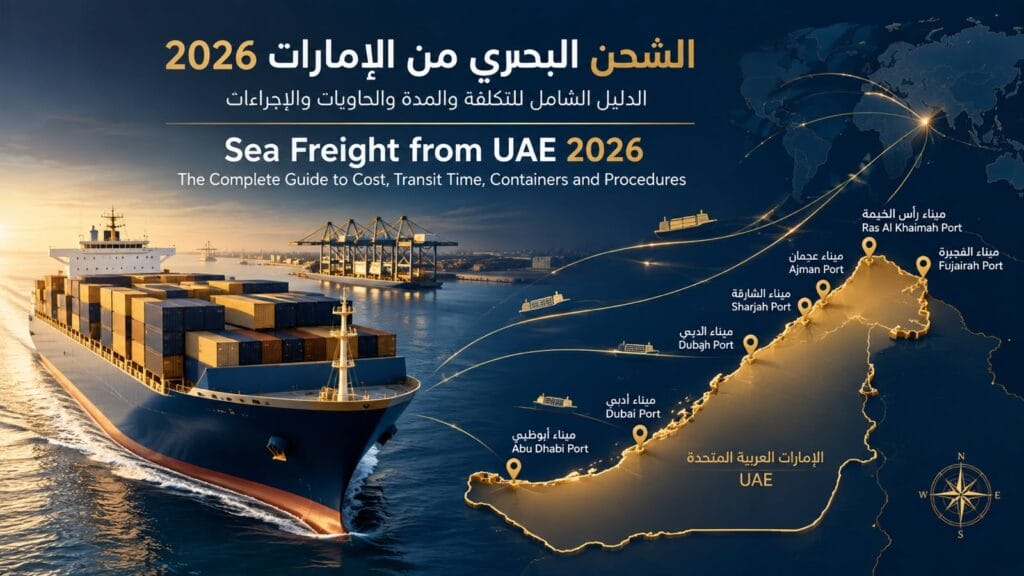
Sea Freight from UAE
Sea Freight from UAE is one of the most important international shipping solutions for businesses and individuals, especially when handling large quantities, heavy cargo, commercial shipments, machinery, vehicles, or goods that do not require the speed of air freight
The UAE’s strategic location has made it an important hub for international trade, re-export activities, and cargo movement between Asia, the Middle East, Africa, Europe, and other global markets. The country also has an advanced network of ports, logistics services, road transportation, and customs clearance solutions
However, choosing Sea Freight from UAE is not simply about booking space on a vessel. A successful shipment starts with selecting the right shipping method and container, followed by proper documentation, packing, customs clearance, and transportation from the port of arrival to the final destination
The cost and transit time of sea freight also vary from one shipment to another depending on the destination, cargo type, size, weight, shipping method, container type, and additional services required
In this comprehensive guide, we explain everything you need to know about Sea Freight from UAE, including shipping methods, container types, costs, transit times, ports, required documents, customs clearance, insurance, international shipping terms, and common mistakes to avoid
Table of Contents
What Is Sea Freight from UAE?
Sea freight is the transportation of goods by commercial vessels from a port in the UAE to a port in the destination country, followed by customs clearance and inland transportation until the shipment reaches its final destination
Sea Freight from UAE is widely used for transporting commercial products, raw materials, spare parts, furniture, vehicles, machinery, industrial goods, and many other types of cargo
The shipping method depends on the nature of the cargo. Goods may be transported in a full container, consolidated with other shipments in a shared container, or handled through specialized solutions for vehicles, heavy equipment, oversized cargo, and other non-standard shipments
For this reason, the appropriate shipping method should be determined before booking, as choosing an unsuitable option may increase costs, cause delays, or create difficulties during loading and unloading
When Is Sea Freight from UAE the Right Choice?
Not every shipment requires sea transportation, so it is important to compare the cargo requirements, available time, and budget before choosing a shipping method
Sea Freight from UAE is particularly suitable for the following situations
Large Commercial Shipments
When the cargo volume is large, sea containers can provide sufficient capacity to transport a significant quantity of goods in a single shipment
Heavy Cargo
Different sea freight solutions can be used to transport heavy machinery, equipment, and other heavy cargo, with the appropriate container or loading method selected according to the shipment specifications
Shipments That Are Not Urgent
When the cargo does not need to arrive quickly, sea freight can be a practical option compared with air freight
Regular International Trade
Companies that regularly import or export goods can use sea freight as part of their supply chain, particularly when dealing with large volumes
Vehicles and Heavy Equipment
Specialized sea freight solutions can be used to transport vehicles, machinery, and heavy equipment depending on the cargo dimensions, weight, and destination
For very small or urgent shipments, air freight may be more suitable in some cases. The choice should depend on the cargo, delivery requirements, budget, and destination
What Are the Main Advantages of Sea Freight from UAE?
Several factors make sea freight an important solution for international trade
Large Shipping Capacity
Containers and commercial vessels can transport large quantities of cargo in a single voyage
Different Container Options
There are several container types designed for dry cargo, refrigerated goods, oversized cargo, heavy equipment, and shipments requiring specialized loading
Suitable for Heavy Shipments
Specialized sea freight solutions can handle heavy cargo that may be more difficult or expensive to transport by air
International Connectivity
The UAE is connected to a broad network of international ports and shipping lines, allowing businesses to transport goods to numerous global markets
Integration with Road Transportation
Sea freight does not end at the port. It can be combined with road transportation to collect cargo from the supplier or customer and deliver it to the final destination
Types of Sea Freight from UAE
The type of Sea Freight from UAE depends on the cargo volume, dimensions, weight, nature, and loading requirements
The most common options include FCL and LCL, along with specialized solutions for vehicles, machinery, and oversized cargo
Full Container Load — FCL
FCL stands for Full Container Load and means that a dedicated container is booked for one shipment
FCL is commonly used when the cargo volume is large or when the shipper prefers to use a dedicated container
One of the advantages of FCL is that the cargo does not share container space with other customers’ shipments, allowing the loading process to be organized according to the nature of the goods
A container does not necessarily have to be completely full to use FCL. A dedicated container may be selected because of the nature of the goods, protection requirements, or transportation conditions
Less than Container Load — LCL
LCL stands for Less than Container Load and is used when the cargo quantity is not large enough to justify booking an entire container
The shipment is consolidated with other customers’ cargo in the same container
LCL can be suitable for small and medium-sized shipments, but the total cost should be considered rather than only the ocean freight rate, as consolidation, handling, storage, customs clearance, and other services may affect the final price
Vehicle Shipping by Sea
Vehicles can be transported by sea using containers or RoRo services depending on the vehicle type, destination, and shipping line requirements
The appropriate option depends on the number of vehicles, their dimensions, value, destination, and loading requirements
RoRo may be suitable for certain vehicles that can be driven onto the vessel, while container shipping may be more suitable in other cases
For more information, see our guide: Car Shipping from UAE 2026 | Procedures, Costs and Best International Shipping Methods
Heavy Equipment and Oversized Cargo
Heavy machinery and oversized equipment require special planning before booking
Solutions such as Flat Rack, Open Top, or other specialized sea freight methods may be used depending on the cargo dimensions and weight
The exact length, width, height, and weight should be confirmed before booking because these details affect the equipment selection, loading process, and handling requirements
What Are the Main Types of Shipping Containers?
Choosing the right container is one of the most important stages of Sea Freight from UAE, because each container type is designed for specific cargo requirements
20-Foot Container
A 20-foot container is widely used for commercial and industrial goods that fit within its available capacity
It can be suitable for many shipments that do not require the additional space of a larger container
40-Foot Container
A 40-foot container provides more space than a 20-foot container and is commonly used when the cargo volume requires additional capacity
40-Foot High Cube Container
A High Cube container provides additional internal height compared with a standard container and can be suitable for cargo that requires more vertical space
Refrigerated Containers — Reefer
Reefer containers are designed for goods that require temperature control during transportation
They can be used for certain food products and temperature-sensitive cargo according to the requirements of the shipment
Open Top Containers
Open Top containers can be used for cargo that is difficult to load through standard container doors because of its height or loading requirements
Flat Rack Containers
Flat Rack containers are used for certain heavy, oversized, or non-standard cargo that cannot be accommodated inside a conventional enclosed container
The container should not be selected based on price alone. Cargo dimensions, weight, loading method, cargo type, port requirements, and shipping line conditions should all be considered
FCL vs LCL in Sea Freight
Choosing between FCL and LCL is one of the most important decisions when arranging Sea Freight from UAE
| Factor | FCL | LCL |
|---|---|---|
| Container use | Dedicated container | Shared container |
| Suitable for | Large shipments or cargo requiring a dedicated container | Small and medium-sized shipments |
| Booking | Full container | Space within a container |
| Handling | Generally less shared handling | Includes consolidation and handling |
| Pricing | Based on container type, size, route and services | Based on cargo volume or weight and related services |
| Best choice | Depends on cargo size and requirements | Suitable when a full container is not required |
The right choice should not be based on cargo volume alone. Total cost, transit time, handling requirements, and cargo characteristics should also be considered
How Is the Cost of Sea Freight from UAE Calculated?
The cost of Sea Freight from UAE varies from one shipment to another, so there is no single price that applies to all shipments
The main factors affecting the cost include
Destination and Port of Arrival
Rates vary according to the route, destination port, shipping line, and service level
Container Type
Standard containers have different costs from specialized equipment such as Reefer, Flat Rack, and other container types
Cargo Size and Weight
Cargo dimensions and weight can affect container selection, loading, handling, and transportation requirements
FCL or LCL
The pricing structure differs between full-container shipments and consolidated cargo
Cargo Type
Certain goods may require special handling, permits, packaging, temperature control, or other services that can affect the total cost
Port and Handling Charges
Additional charges may apply for port operations, handling, documentation, and other services depending on the route and port
Customs Clearance
Customs clearance costs vary depending on the destination, cargo type, customs classification, and required documentation
Inland Transportation
If the service includes transportation from the customer’s warehouse to the departure port or from the arrival port to the final delivery address, inland transportation costs may be included
Insurance
Insurance costs may be added if the customer chooses cargo insurance based on the shipment value and required coverage
Additional Services
Some shipments may require packing, storage, loading assistance, unloading, special handling, or other logistics services
For this reason, when comparing sea freight quotations, it is important to understand exactly what is included in the quoted price and which services are charged separately
For more information, see: Shipping Cost from UAE: Key Factors That Affect the Price and How to Get the Right Rate
How Can You Get an Accurate Sea Freight Quotation?
To receive a quotation that is closer to the actual shipping cost, accurate shipment details should be provided
Important information may include
- Pickup location
- Final destination
- Destination port, if known
- Cargo type
- Number of packages
- Cargo weight
- Package dimensions
- Cargo value
- Number of vehicles or equipment units, if applicable
- Temperature or storage requirements
- Expected shipping date
The more accurate the information, the easier it is to select the right shipping method and container and estimate the services required
Sea Freight Transit Time from UAE
The Sea Freight transit time from UAE depends on several factors, so there is no single transit time that applies to every destination
Important factors include
- Destination and arrival port
- Departure port
- Shipping line
- Service type
- Sailing availability
- Cargo preparation time
- Export procedures
- Customs clearance
- Port operating conditions
- Inland transportation at destination
It is also important to distinguish between the actual ocean transit time and the total shipment time from pickup to final delivery
The shipment may require additional time before sailing for documentation, booking, packing, and transportation to the port, as well as additional time after arrival for customs clearance and final delivery
For more information about international shipping times, see: International Shipping Time from UAE: Complete Guide to Transit Times by Destination
Major Sea Ports in the UAE
The UAE has several commercial ports that support container shipping, cargo transportation, international trade, and logistics operations
Some of the major ports connected to commercial shipping include
Jebel Ali Port
Jebel Ali is one of the region’s major shipping and trade hubs and is connected to a wide network of shipping lines and logistics services
It handles various types of cargo, containers, and international trade activities
Khalifa Port
Located in Abu Dhabi, Khalifa Port handles container and commercial cargo operations and supports industrial and logistics activities in the region
Port Khalid
Located in Sharjah, Port Khalid supports commercial and maritime activities in the emirate
Saqr Port
Located in Ras Al Khaimah, Saqr Port serves different sectors of cargo transportation and maritime trade
The most suitable port depends on the cargo location, destination, shipping line, cargo type, and required services
Sea Freight from UAE: Step-by-Step Process
The Sea Freight from UAE process involves several stages, and the exact requirements may vary depending on the cargo and destination
Step 1: Determine the Shipment Requirements
The first step is to identify the cargo type, quantity, weight, dimensions, pickup location, and final destination
Step 2: Choose the Shipping Method
The appropriate option is selected, such as FCL, LCL, RoRo, Flat Rack, or another specialized solution
Step 3: Select the Container
The container size and type are selected according to the cargo dimensions and characteristics
Step 4: Prepare the Quotation
The required services and costs are identified, including ocean freight, port charges, customs clearance, inland transportation, and other services
Step 5: Prepare the Documents
Commercial and customs documents are prepared according to the cargo and destination requirements
Step 6: Pack and Load the Cargo
The cargo should be packed appropriately and protected against movement, moisture, impact, and other transportation risks
Step 7: Transport the Cargo to the Port
The cargo is transported to the departure port according to the agreed schedule
Step 8: Complete Export Procedures
The shipment goes through the required customs and regulatory procedures before departure
Step 9: Load the Shipment onto the Vessel
Once the required procedures are completed, the container or cargo is loaded onto the vessel
Step 10: Ocean Transportation
The shipment travels along the planned sea route to the destination port
Step 11: Unloading and Customs Clearance
After arrival, the cargo is unloaded and the required import customs procedures are completed
Step 12: Final Transportation and Delivery
After customs clearance, the shipment is transported to the warehouse or final delivery address according to the agreed service
For a detailed overview of the complete international shipping journey, see: International Shipping from UAE Step by Step | Complete Guide from Pickup to Final Delivery
Documents Required for Sea Freight from UAE
Required documents vary according to the cargo, destination, and importing country, but common shipping documents may include
Commercial Invoice
The commercial invoice provides information about the goods, their value, and the seller and buyer
Packing List
The packing list provides details about the shipment contents, number of packages, weights, and dimensions when required
Bill of Lading
The Bill of Lading is one of the key documents used in ocean transportation and contains shipment, carrier, consignee, route, and transportation information according to the type of document
Certificate of Origin
A Certificate of Origin may be required depending on the shipment and the destination country’s requirements
Customs Documents
Customs documentation varies according to the destination, cargo type, and import or export regulations
Special Permits
Certain products may require additional approvals, certificates, or permits
All documents should be reviewed carefully before shipping, as incorrect or inconsistent information between the commercial invoice, packing list, and other documents can cause delays
For more information, see: Documents Required for International Shipping from UAE: Complete Guide for Individuals and Businesses
For more information, visit Dubai Customs website
What Is a Bill of Lading?
The Bill of Lading is one of the most important documents in ocean transportation
It contains key information about the shipment, parties involved, loading port, destination port, and transportation arrangements according to the type of Bill of Lading issued
The information on the Bill of Lading should be reviewed carefully and checked against the other shipment documents
Errors in the consignee name, cargo description, or other important information can create problems during customs clearance or cargo release
Packing Cargo for Sea Freight
Proper packing is an essential part of successful Sea Freight from UAE
Cargo may go through several stages of loading, handling, storage, and unloading before reaching the final customer
Packaging should therefore be suitable for the nature of the goods
Fragile products may require additional protection, while metal, industrial, and machinery cargo may require secure fastening to prevent movement during transportation
Moisture-sensitive goods should also be protected against humidity and other conditions that could affect the cargo
For oversized cargo and heavy equipment, the loading and securing method should be planned before the shipment is loaded
Is Cargo Insurance Important for Sea Freight?
Cargo may face different risks during transportation, handling, storage, loading, and unloading
For this reason, businesses and individuals may consider suitable cargo insurance based on the value of the goods, cargo type, route, risk level, and required coverage
The insurance policy should be reviewed carefully to understand the covered risks, exclusions, coverage limits, and procedures required in case of loss or damage
Insurance should also not be considered a replacement for proper packaging and cargo securing, as correct packing remains one of the most important ways to protect goods during transportation
Sea Freight for Dangerous Goods
Certain goods require special procedures when transported by sea because of their nature
These may include certain chemicals, batteries, flammable materials, and other products subject to specialized transportation regulations
The nature of the cargo must be declared accurately before booking. Goods subject to special requirements should never be shipped under standard procedures without proper classification and approval
Depending on the cargo, the shipment may require special documentation, classification, packaging, labeling, and approvals
Sea Freight for Personal Belongings
Sea transportation is not limited to commercial cargo
Individuals may use Sea Freight from UAE when relocating to another country or sending large quantities of furniture and personal belongings
The appropriate shipping method depends on the volume of the belongings, their dimensions, and the destination
LCL may be suitable for a smaller quantity, while FCL can be more practical when the volume of household goods is large
A detailed inventory should be prepared, and customs requirements in the destination country should be checked before shipping
For more information:
Moving Personal Belongings from UAE Safely | Complete Guide to International Shipping
Car Shipping by Sea from UAE
Sea freight is widely used to transport vehicles internationally, but the appropriate method depends on the vehicle type, number of vehicles, destination, and shipping requirements
Available options may include
- Container shipping
- RoRo shipping
- Specialized sea freight solutions
Vehicle documentation should be prepared carefully, and the import requirements of the destination country should be checked before shipping
Heavy Equipment Shipping from UAE
Heavy equipment requires different planning compared with standard cargo
Equipment dimensions, weight, center of gravity, lifting requirements, and loading method should all be considered
Some equipment may require Flat Rack containers or specialized loading solutions, while other machinery may fit standard containers depending on its dimensions
The port handling process and unloading method at the destination should also be reviewed before confirming the shipment
Heavy equipment shipping requires coordination between the shipping company, road transport provider, port, and customs clearance team
Sea Freight from UAE to the GCC
The GCC countries are important regional destinations for cargo originating in the UAE, but the transportation method, cost, and transit time vary according to the destination, city, cargo type, and service
Major regional destinations include
- Saudi Arabia
- Oman
- Kuwait
- Bahrain
- Qatar
Sea freight may be suitable for certain shipments, while road transportation may be more practical for some short-distance routes or destinations located close to land borders
The appropriate option should therefore be selected according to the cargo, pickup location, final destination, required delivery time, and budget
Sea Freight from UAE to Saudi Arabia
The appropriate transportation method for Saudi Arabia depends on the destination city, cargo type, shipment size, and delivery requirements
For large shipments, sea freight can be considered among the available transportation options, while road freight may be more practical for certain routes and destinations
Import and customs clearance requirements in Saudi Arabia should also be reviewed before the shipment is dispatched
For more information: Shipping from UAE to Saudi Arabia | Reliable International Shipping Services and Solutions
Sea Freight from UAE to Egypt
Sea freight is commonly used to transport different types of cargo between the UAE and Egypt
Costs and transit times vary depending on the port, cargo type, shipping method, and required procedures
Shipping documents and Egyptian customs requirements should be reviewed before dispatching the shipment to reduce the risk of delays at destination
For more information: Shipping from UAE to Egypt | Complete Guide to Costs, Shipping Methods and Customs Procedures
Sea Freight from UAE to Turkey
There is significant commercial trade between the UAE and Turkey involving different types of products and cargo
The sea route depends on the departure port, destination port, shipping line, and service type
Required documents, customs procedures, and import requirements should also be reviewed before shipping
For more information: Shipping from UAE to Turkey 2026 | Complete Guide to Cost, Transit Time, Procedures and Customs
Sea Freight from China to UAE
China is one of the major sources of imported goods for the UAE, making sea transportation from China to the UAE an important solution for commercial cargo
The choice of departure port, container, and shipping method depends on the supplier, cargo type, shipment volume, and final destination within the UAE
The total cost should also include ocean freight, customs clearance, and transportation from the UAE port to the warehouse or final delivery address
For the complete guide: Shipping from China to UAE 2026 | Costs, Transit Time, Customs and Best Shipping Methods
What Role Does Customs Clearance Play in Sea Freight?
Customs clearance is an essential part of the sea freight process because the arrival of a container at the port does not automatically mean that the cargo is ready for delivery
The required customs procedures must be completed according to the cargo type, value, classification, and regulations of the importing country
The following practices can help reduce customs-related delays
- Prepare documents in advance
- Use an accurate cargo description
- Review the commercial invoice
- Check the packing list
- Confirm the appropriate customs classification
- Understand potential duties and taxes
- Obtain required permits and approvals
You can also explore our specialized guides covering customs clearance in the UAE, customs duty calculations, and documents required for customs clearance
What Is the Relationship Between Incoterms and Sea Freight?
Incoterms 2020 define responsibilities between buyers and sellers in international trade transactions
They help determine which party is responsible for certain transportation costs, risks, and procedures at different stages of the shipment
Understanding the applicable Incoterm is therefore important when calculating the actual cost of sea freight
The final amount paid by the buyer can vary depending on the agreed trade term and the responsibilities assigned to each party
For more information: Incoterms 2020: Complete Guide to International Trade Terms and Choosing the Right Shipping Term
Sea Freight During Changes in Shipping Costs or Route Conditions
Ocean freight rates can change over time due to several factors, including fuel prices, trade volumes, vessel capacity, port conditions, and changes in shipping routes
Geopolitical events or changes affecting major maritime routes can also influence transit times and transportation costs
For this reason, an old quotation should not automatically be used for a new shipment, especially when there is a significant period between receiving the quotation and the actual shipping date
An updated quotation should be obtained before confirming the booking
How Do You Choose the Right Sea Freight Company?
When choosing a company to coordinate Sea Freight from UAE, price should not be the only consideration
Important factors include
Experience with the Destination
A company familiar with the required route and destination can help coordinate the shipment according to local procedures and requirements
Clear Quotations
The quotation should clearly explain what is included and which charges may be billed separately
Customs Clearance Services
Experience with customs procedures can help organize documentation and reduce avoidable errors
Shipment Tracking and Communication
Clear communication from booking to delivery helps the customer understand the status of the shipment throughout the transportation process
Ability to Handle Different Cargo Types
Commercial cargo, vehicles, heavy equipment, and personal belongings may have different requirements, so the shipping solution should match the cargo type
Door-to-Door Coordination
Customers requiring an integrated service should confirm whether the company can coordinate pickup, sea transportation, customs clearance, and final delivery
Common Mistakes to Avoid in Sea Freight from UAE
Several mistakes can increase costs or delay a shipment
Choosing a Shipping Method Based Only on Price
The lowest quoted rate may not represent the lowest total cost if important services or charges are excluded
Providing Incorrect Cargo Dimensions or Weight
Incorrect information may result in an unsuitable container or unexpected additional costs
Delaying Documentation
Missing or incorrect documents can delay export, import, or customs procedures
Failing to Declare the Cargo Type
Some products require special handling, documentation, or permits, so their nature should be disclosed before booking
Ignoring Additional Costs
Ocean freight should be evaluated together with port handling, customs clearance, inland transportation, storage, and other relevant services
Not Understanding the Trade Terms
A lack of understanding of Incoterms can lead to confusion about which party is responsible for certain costs and risks
Failing to Plan the Final Destination
Arrival at the port is not the same as final delivery, so inland transportation should be planned in advance
How Can You Reduce Sea Freight Costs from UAE?
Good planning can help control part of the total shipping cost
Choose the Appropriate Shipping Method
LCL may be suitable for smaller shipments, while FCL may be more efficient for larger volumes
Optimize Packaging
Proper packaging and efficient use of available space can help reduce unused capacity
Plan in Advance
Early planning may provide more options in terms of sailing schedules, shipping services, and logistics arrangements
Compare Complete Quotations
Compare the total cost and included services rather than comparing only the basic ocean freight rate
Consolidate Shipments When Appropriate
Businesses with multiple shipments may consider consolidation when it makes commercial and logistical sense
Evaluate Ports and Routes
Different ports, routes, and shipping lines may have different costs and schedules, so available options should be reviewed
Is Sea Freight Cheaper Than Air Freight?
There is no single answer that applies to every shipment
The difference depends on cargo weight and volume, destination, required delivery time, cargo type, and additional services
In general, sea freight can be suitable for large shipments that do not require fast delivery, while air freight offers faster transportation and may be appropriate for urgent or high-value shipments depending on the circumstances
The decision should therefore be based on total cost, transit time, cargo characteristics, and delivery requirements, rather than the transportation rate alone
When Is LCL Better and When Is FCL Better?
LCL can be considered when the shipment volume is relatively small and does not justify booking an entire container
FCL may be more suitable when the shipment volume is large or when the cargo requires a dedicated container
The final decision should consider cargo volume, total cost, transit time, handling requirements, and the nature of the goods
What Happens If a Sea Shipment Is Delayed?
Delays can occur for several reasons, including changes in vessel schedules, port congestion, operational conditions, documentation issues, or customs clearance procedures
For this reason, the sailing date should not be treated as the exact final delivery date
For shipments connected to important commercial deadlines, it is advisable to allow an appropriate time buffer
Can Sea Freight Shipments Be Tracked?
Tracking options depend on the shipping line and service type
Shipment tracking may use booking information, container numbers, Bill of Lading details, or other tracking references depending on the system available
Shipment information and documents should be kept throughout the transportation process for reference during shipping, customs clearance, and delivery
Frequently Asked Questions About Sea Freight from UAE
How much does Sea Freight from UAE cost?
The cost depends on the destination, container type, cargo size and weight, cargo type, shipping method, port charges, customs clearance, inland transportation, and additional services
How long does Sea Freight from UAE take?
Transit time varies according to the destination, departure and arrival ports, shipping line, service type, export procedures, customs clearance, and final delivery requirements
What is the difference between FCL and LCL?
FCL means booking a full dedicated container for the shipment, while LCL means sharing container space with other shipments when the cargo does not require a full container
What container sizes are commonly used for sea freight?
The most common container sizes include 20-foot and 40-foot containers, along with specialized options such as 40-foot High Cube, Reefer, Open Top, and Flat Rack containers
Can I ship a car from UAE by sea?
Yes. Vehicles can be transported by sea using container shipping or RoRo services depending on the vehicle, destination, shipping line, and applicable requirements
Can heavy equipment be shipped by sea?
Yes. Heavy equipment can be transported using specialized solutions depending on its weight and dimensions, including Flat Rack containers and other specialized loading methods
What documents are required for sea freight?
Requirements vary by destination and cargo type, but commonly include the commercial invoice, packing list, Bill of Lading, Certificate of Origin, customs documents, and special permits when applicable
Is customs clearance included in the shipping cost?
Not necessarily. Shipping quotations differ in terms of included services, so the customer should confirm whether customs clearance, port handling, inland transportation, and other charges are included
Can personal belongings be shipped by sea?
Yes. LCL or FCL can be used depending on the volume of personal belongings and the destination, while the destination country’s customs requirements should be reviewed in advance
Which UAE port is best for sea freight?
The most suitable port depends on the cargo location, destination, shipping line, cargo type, and required services. There is no single port that is best for every shipment
Can goods be shipped from China to UAE by sea?
Yes. Sea freight is widely used to transport commercial goods from China to the UAE, with cost and transit time depending on the departure port, cargo type, container, shipping line, and destination port
How do I choose the right shipping company?
Start by identifying your cargo type, destination, required services, and delivery timeline. Then compare quotations, included services, customs clearance support, shipment tracking, and door-to-door transportation options
When Do You Need a Specialized Sea Freight Company?
Booking a sea shipment may appear straightforward, but container selection, documentation, port procedures, customs clearance, inland transportation, and final delivery can make the process more complex, especially for commercial, oversized, heavy, or specialized cargo
A specialized shipping company can help coordinate the different stages of the shipment and connect ocean freight with road transportation, customs clearance, and final delivery
This becomes particularly important when the shipment has a high value, large dimensions, special handling requirements, or a specific commercial delivery deadline
Sea Freight from UAE with Golden Ocean Shipping
At Golden Ocean Shipping, we provide international shipping solutions for individuals and businesses, coordinating the different stages of the shipment according to its type, destination, and specific requirements
Our services include Sea Freight from UAE, along with air freight, land freight, customs clearance, vehicle shipping, heavy equipment transportation, and logistics solutions for international shipments
Whether you need a full container, LCL shipment, vehicle transportation, heavy equipment shipping, or commercial cargo transportation, we can review your shipment details and help determine a suitable solution in terms of shipping method, container, documentation, and required procedures
If you are planning Sea Freight from UAE to Saudi Arabia, Egypt, Turkey, the GCC, or another international destination, contact Golden Ocean Shipping to request a quotation based on your shipment details
