

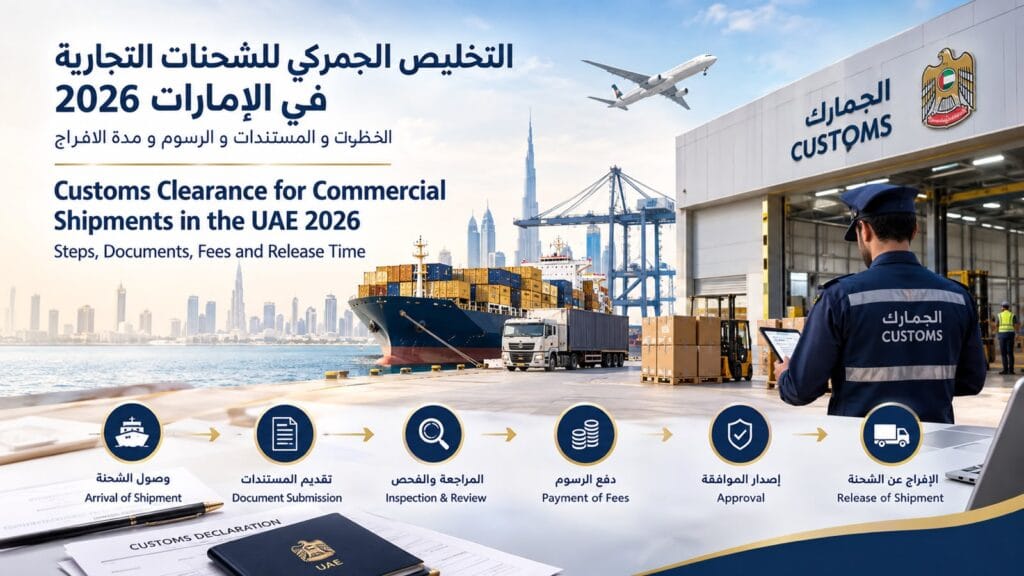
Commercial Customs Clearance in the UAE
When a commercial shipment arrives in the UAE, this does not necessarily mean that the goods are ready to be collected or delivered
Before the shipment can be released, a number of customs procedures must be completed, and the exact requirements can vary depending on the type of goods, the method of transportation, the available documents, and the customs authority handling the shipment
Commercial customs clearance in the UAE is one of the most important stages in the import process because inaccurate information, missing documents, unclear descriptions, or additional regulatory requirements can delay the release of goods
The process usually starts with preparing the shipment information and supporting documents, followed by submitting the customs declaration and completing the required procedures
Depending on the nature of the goods, the shipment may also require inspection or approval from the relevant authorities before the customs release can be completed
Dubai Customs provides customs declaration services for different types of cargo movements, including import, export, transit, temporary admission and other customs procedures
For businesses importing goods into the country, commercial customs clearance in the UAE is an important part of the supply chain and should be planned before the shipment leaves the country of origin
Early preparation gives importers enough time to review documents, confirm customs requirements and identify whether the goods require additional approvals before arrival
In This Guide, You Will Learn
- What commercial customs clearance in the UAE means
- What happens to a commercial shipment after it arrives in the UAE
- The main documents required for customs clearance
- How customs duties and customs value are determined
- When a shipment may require inspection or additional approvals
- The most common reasons for customs clearance delays
- Whether you need a customs broker
- How long customs clearance may take
- How to prepare your shipment before it arrives
- How customs clearance can differ depending on the shipping method
- What to consider when importing vehicles, heavy equipment and special cargo
- Practical questions commonly asked by importers
Table of Contents
What Is Commercial Customs Clearance in the UAE?
Customs clearance is the process through which goods are declared to the relevant customs authority and the required procedures are completed to allow the goods to enter, leave or move through the UAE under the applicable customs regime
For commercial shipments, the process should ideally begin before the cargo arrives because reviewing documents and shipment information in advance can help identify potential issues before the customs declaration is submitted
Customs clearance is not simply about paying customs duties
Depending on the shipment, the process may involve reviewing the description and value of the goods, confirming their customs classification, checking supporting documents, arranging inspection when required, and obtaining approvals for regulated or restricted products
This is why commercial customs clearance in the UAE should be treated as part of the overall logistics planning process rather than as a final step that begins only after the shipment reaches the port, airport or border
The earlier the shipment information and documents are reviewed, the easier it becomes to identify missing information and resolve potential issues before they cause delays
What Happens to a Commercial Shipment After It Arrives in the UAE?
The journey from arrival to customs release can be divided into several connected stages, although the exact process depends on the customs authority, type of goods, shipping method and customs procedure involved
1. Preparing the Shipment Documents
Before customs clearance begins, the importer should make sure that the main shipment documents and information are available and accurate
Common documents may include the commercial invoice, packing list, bill of lading or other transport document, certificate of origin where applicable, and any additional approvals or documents required for the specific goods
If you are preparing an international shipment to the UAE, reviewing the required shipping documents before the cargo arrives can help identify missing information at an early stage
The information contained in the documents should also be consistent, particularly when it comes to the description, quantity and value of the goods
2. Submitting the Customs Declaration
Once the required information and documents are prepared, the customs declaration is submitted according to the applicable customs procedure
The procedure can differ depending on whether the shipment is being imported, exported, moved under transit, temporarily admitted or handled under another customs regime
The accuracy of the declaration is particularly important because it contains key information about the shipment, including the importer, goods, quantities, value and classification
3. Reviewing the Shipment Information
After the declaration is submitted, the customs authority may review the information and supporting documents
Additional information or documents may be requested when clarification is needed regarding the value, nature, origin, classification or other details of the shipment
This is one reason why accurate commercial invoices and properly prepared supporting documents are essential for commercial customs clearance in the UAE
If the information submitted is clear and consistent, the process can generally move forward more smoothly
4. Customs Inspection When Required
Not every shipment necessarily goes through the same inspection process
Some shipments may be selected for inspection depending on the applicable customs procedures, the nature of the goods and risk-management requirements
Dubai Customs provides services related to customs inspection appointments, cargo information, goods classification, valuation and restricted goods procedures
Inspection should also be distinguished from regulatory approval
Certain products may require approval, certification or clearance from another government or regulatory authority before they can be released
5. Calculating and Paying Customs Duties
Customs duties and other applicable amounts are determined based on the customs value, classification, nature of the goods and the customs procedure applicable to the shipment
The customs value is not necessarily the same as the invoice value alone
Depending on the applicable valuation rules, elements such as freight and insurance may be considered when determining the customs value
For this reason, importers should review the complete shipment details before estimating their customs costs
Understanding how customs duties are calculated can also help businesses prepare financially before the shipment arrives rather than discovering the expected costs during the clearance process
6. Customs Release
Once the required procedures have been completed and the applicable duties and charges have been paid, the customs release process can be completed according to the customs status of the shipment
At this stage, the customs clearance process is essentially completed, but the cargo may still need to be transported to a warehouse, distribution center, customer or final destination
For this reason, successful commercial customs clearance in the UAE should be viewed as part of a wider logistics process that continues until the goods reach their final destination
What Documents Are Required for Commercial Customs Clearance?
The exact documents required can vary depending on the type of goods, customs authority, port or airport, customs procedure and regulatory requirements
However, common documents and information may include:
- Commercial invoice
- Packing list
- Bill of lading or applicable transport document
- Certificate of origin when required
- Importer information and business documents
- Special permits or approvals for regulated goods
- Additional documents requested by the customs or regulatory authority
The UAE government import and export guidance refers to documents such as detailed invoices, packing lists, import declarations, relevant licenses and approvals depending on the nature of the goods and the applicable customs procedure
The important point is that customs documents should not be treated as a formality
The information in the commercial invoice, packing list, transport document and other supporting records should be consistent and accurately describe the shipment
For businesses importing several products at once, proper documentation becomes even more important because different products may have different classifications or regulatory requirements
Accurate documentation is one of the key factors in commercial customs clearance in the UAE
The commercial invoice, packing list and transport documents should contain consistent information about the goods, including their description, quantity and value
When documents are incomplete or contain conflicting information, the customs clearance process may require additional clarification before the shipment can be released
For businesses preparing commercial customs clearance in the UAE, it is important to verify the latest documentation requirements before the shipment arrives. Dubai Customs provides official guidance on customs declarations and lists documents such as the commercial invoice, packing list, certificate of origin and transport documents, depending on the type of declaration and shipping channel
For the latest requirements, businesses can refer to the official Dubai Customs customs declaration service before preparing their shipment
How Are Customs Duties Determined for Commercial Shipments?
Customs duties are one of the main concerns for importers, but the amount payable cannot always be determined simply by looking at the purchase price of the goods
The applicable amount may depend on the customs value, tariff classification, nature of the goods and the customs procedure used for the shipment
The first step is to establish the customs value according to the applicable valuation rules and then apply the relevant tariff treatment based on the classification of the goods
This is why importers should avoid relying on a rough estimate when dealing with high-value shipments or shipments containing multiple products
Does Freight Cost Affect Customs Value?
Depending on the applicable customs valuation rules, freight, insurance and other relevant costs may form part of the customs value
This means that the customs value should not automatically be assumed to be identical to the purchase price shown on the commercial invoice
For businesses planning an international shipment, understanding the relationship between the goods value, transportation costs and customs valuation can make it easier to estimate the overall import cost
For importers planning commercial customs clearance in the UAE, estimating the potential customs costs before the shipment arrives can make financial planning easier
The final amount depends on the specific goods, their classification, customs value and applicable customs procedures, so businesses should review the shipment details rather than rely on a general estimate
When Does a Commercial Shipment Require Customs Inspection?
Customs inspection is part of the controls used to regulate the movement of goods, but not every shipment necessarily goes through the same level of inspection
A shipment may be selected for inspection or additional verification depending on its characteristics, declared information and the applicable risk-management procedures
The inspection may involve checking whether the actual goods correspond with the information declared in the customs documentation
Some products may also require approval or certification from another government or regulatory authority
This distinction is important because customs inspection and regulatory approval are not always the same thing
An importer may therefore need to complete both customs requirements and additional regulatory requirements before the goods can be released
What Happens If Customs Requests Additional Documents?
A request for additional documents does not necessarily mean that there is a serious problem with the shipment
The customs authority may simply require clarification about the value, description, origin, classification or nature of the goods
The requested document may also relate to the specific type of product being imported
However, responding quickly is important because the shipment may remain pending until the requested information or document is provided
This is one area where working with an experienced customs clearance provider can make the process easier, especially when the shipment involves several documents or regulatory requirements
During commercial customs clearance in the UAE, customs authorities may request clarification or supporting documents when the information provided does not fully explain the shipment
Responding promptly and providing clear documentation can help avoid unnecessary waiting time and keep the clearance process moving
Which Goods May Require Additional Approvals?
Commercial products do not all have the same regulatory requirements
Certain categories may require additional approvals, certificates or permits depending on their nature and the regulations applicable to them
Examples can include certain food products, medical products, cosmetics, technical equipment and other regulated or restricted goods
Importers should therefore check the requirements before shipping, particularly when importing a product for the first time
Discovering an additional approval requirement only after the cargo has arrived can create unnecessary delays
Early preparation allows the importer, supplier, shipping company and customs clearance team to coordinate the required documents before the cargo reaches the UAE
7 Common Reasons Commercial Shipments Are Delayed in Customs
Even when the goods themselves are in order, several issues can delay customs clearance
1. Missing Documents
A missing document or required approval can prevent the clearance process from moving forward until the requirement is completed
2. Inconsistent Information
Differences between the commercial invoice, packing list, bill of lading or other shipment records may lead to additional questions or document reviews
3. Unclear Product Description
A vague description can make it more difficult to determine the nature and classification of the goods
For example, descriptions such as “products” or “parts” may not provide enough information to clearly identify the actual goods
A more specific description can make the shipment information easier to review
4. Incorrect Customs Classification
The correct customs classification is an important part of the clearance process because it can affect the applicable tariff treatment and regulatory requirements
5. Unclear Declared Value
If the declared value requires clarification or supporting evidence, additional information may be requested before the clearance process can continue
6. Inspection or Additional Approval
Some shipments may require inspection or approval from another authority depending on the nature of the goods
7. Lack of Preparation Before Arrival
One of the most avoidable causes of delay is starting the customs preparation only after the shipment has already arrived
Preparing the documents and checking the requirements in advance gives the importer more time to resolve potential issues
Most delays in commercial customs clearance in the UAE are easier to manage when the importer knows the reason behind them
Instead of waiting without clear information, the importer or customs clearance provider should identify whether the delay relates to documentation, inspection, classification, valuation or an additional approval
Once the reason is identified, the required action can usually be addressed more directly
Do You Need a Customs Broker?
An importer may be able to handle customs procedures directly in cases where the applicable rules allow it
Businesses can also appoint a licensed customs broker or authorized representative to handle customs procedures on their behalf
The more important question is often not whether a company can technically complete the process itself, but whether it has the time, experience and resources needed to manage the details correctly
For companies that import frequently, work with multiple suppliers or handle different types of products, working with a specialized customs clearance provider can make the process more manageable
This can be particularly useful when the shipment requires document review, classification, inspection coordination or additional approvals
What Does a Customs Broker Do?
The role of a customs broker can go beyond submitting a customs declaration
Depending on the agreed scope of service, the broker may help review documents, submit customs information, coordinate procedures, respond to requests and follow the shipment through the clearance process
This is especially valuable when the customs clearance process needs to be coordinated with transportation and delivery
A company experienced in both shipping and customs clearance can manage these stages as part of one logistics process rather than treating them as completely separate activities
Professional support can be particularly useful when commercial customs clearance in the UAE involves multiple products, repeated shipments or additional regulatory requirements
An experienced customs clearance provider can help businesses organize documents, follow the required procedures and coordinate communication when additional information is requested
How Long Does Commercial Customs Clearance Take in the UAE?
There is no single clearance time that applies to every commercial shipment
A shipment with complete documents, accurate information and no additional inspection or approvals may move through the process more smoothly
Another shipment may require more time because of missing documents, inspection, additional approvals, classification questions or requests for clarification
Factors that can affect commercial customs clearance in the UAE include:
- Completeness of the documents
- Accuracy of shipment information
- Type of goods
- Customs classification
- Declared value
- Customs inspection
- Additional approvals
- Customs procedure
- Speed of response to customs requests
For this reason, it is better to avoid promising a fixed clearance time before reviewing the shipment details
The transportation time should also be considered separately from customs clearance time because a shipment may reach the UAE quickly but still require additional time before final release
How Can You Prepare for Customs Clearance Before the Shipment Arrives?
Early preparation can make the customs clearance process more organized and reduce avoidable delays
Pre-Arrival Customs Clearance Checklist
Documents
☐ Commercial invoice
☐ Packing list
☐ Bill of lading or applicable transport document
☐ Certificate of origin when required
☐ Required permits and approvals
Cargo Information
☐ Clear description of the products
☐ Correct quantities and weights
☐ Consistent information across all documents
☐ Appropriate customs classification
☐ Accurate declared value
Before the Shipment Arrives
☐ Confirm the expected port, airport or border entry point
☐ Check the requirements for the specific goods
☐ Estimate customs duties and related clearance costs
☐ Identify who will manage the customs clearance
☐ Prepare any additional documents that may be required
These simple steps can make a significant difference, particularly for large commercial shipments or cargo containing multiple product categories
Preparing for commercial customs clearance in the UAE before the cargo arrives gives businesses more time to review the shipment and address potential issues
This is especially useful for first-time importers and companies handling high-value shipments or multiple product categories
A few hours of preparation before arrival can sometimes prevent much longer delays after the cargo reaches the UAE
Does Customs Clearance Differ by Shipping Method?
The practical details of customs clearance can vary depending on whether the shipment arrives by sea, air or road
Sea freight involves port and shipping documentation, while air freight follows procedures related to the airport and air cargo
Road freight may involve additional considerations related to border crossings and the specific customs procedure used for the movement
For this reason, choosing a shipping method should not be based solely on the transportation price
Businesses comparing sea, air and road freight should consider the type of cargo, required delivery time, total cost and customs requirements
For urgent shipments, air freight may be considered when speed is more important than transportation cost, while sea freight can be suitable for larger shipments where transit time allows
What About Vehicles, Heavy Equipment and Special Cargo?
Some types of cargo require additional planning because of their size, value, nature or specific regulatory requirements
Vehicle shipping from the UAE, for example, involves documentation and procedures related to the vehicle itself
Heavy equipment and oversized cargo may also require additional transportation planning because of their dimensions, weight and handling requirements
These shipments should not automatically be treated in the same way as a standard commercial cargo shipment
Businesses planning to ship vehicles from the UAE should review the specific procedures, costs and international shipping options applicable to vehicle transportation before starting the process
For heavy equipment and project cargo, early coordination between the shipper, carrier, customs clearance provider and receiving party is particularly important
What Should You Do If Your Shipment Is Delayed in Customs?
The first step is to identify the actual reason for the delay rather than assuming that the problem is related to customs duties
The issue may involve a missing document, a request for clarification, an inspection, a required approval, a difference in shipment information or a question regarding value or classification
Once the reason is identified, the required document or action can be addressed directly
Fast communication with the customs broker or party responsible for the shipment is important because delays in responding to customs requests can extend the waiting time
Keeping organized copies of invoices, shipping documents and cargo information can also make it easier to respond when additional information is requested
Why Should Customs Clearance Preparation Start Before the Shipment Arrives?
One of the most common mistakes importers make is waiting until the cargo arrives before thinking about customs clearance
Early preparation gives the importer time to review documents, confirm requirements, check the classification, estimate duties and arrange any required approvals
This becomes particularly important when the shipment involves coordination between the supplier, shipping company, importer and customs clearance provider
The more information that is ready before the cargo arrives, the more organized commercial customs clearance in the UAE is likely to be
Customs Clearance and International Shipping Work Together
Customs clearance should not be viewed as a completely separate activity from international shipping
The choice of transportation method, packaging, documents, cargo value, product type and destination can all affect the overall logistics process
For example, a low transportation price does not necessarily mean that the shipment will have the lowest overall cost if the selected shipping method does not suit the cargo or delivery requirements
Understanding the factors that affect international shipping costs can help businesses compare quotations more accurately
The Incoterms agreed between the buyer and seller are also important because they define how certain transportation, insurance, delivery and customs responsibilities are allocated between the parties
How Should You Choose a Customs Clearance Provider?
The lowest price should not be the only factor when choosing a customs clearance provider
Businesses should consider experience with the type of goods being imported, knowledge of customs procedures, communication speed, document handling, transparency of costs and the ability to coordinate customs clearance with transportation and delivery
For companies handling international shipments regularly, working with a logistics provider that can coordinate both shipping and customs clearance can simplify the process
A team that understands the shipment from the booking stage can also identify potential documentation or customs issues before the cargo reaches the UAE
Practical Example: How Does a Commercial Shipment Go Through Customs Clearance?
Imagine a UAE-based company importing a commercial shipment from another country containing several product categories packed into multiple cartons
Before the shipment arrives, the importer prepares the commercial invoice, packing list, bill of lading and any other documents required for the products
The information is reviewed to make sure that product descriptions, quantities and declared values are consistent across the shipment documents
Once the cargo arrives, the customs declaration is submitted according to the applicable procedure
The information and documents are then reviewed, and the shipment may be selected for inspection or additional documentation depending on the circumstances
If the documents are complete and no additional requirements apply, the process continues toward the assessment and payment of applicable duties and charges followed by customs release
If a product description is unclear or an additional approval has not been prepared, the process may remain pending until the issue is resolved
This example shows why customs clearance preparation should begin before the shipment reaches the UAE rather than after arrival
What If the Shipment Contains Multiple Products?
Shipments containing multiple products require particular attention to product descriptions, quantities and customs classifications
Different products may have different classifications and regulatory requirements
For example, an invoice containing dozens of products should provide enough detail to identify the individual goods rather than using one broad description for the entire shipment
Clear documentation makes it easier to match the invoice, packing list and actual cargo
This becomes especially important for companies importing large product ranges from different suppliers
Can a Shipment Be Ready for Transport but Not Ready for Customs Clearance?
Yes, A supplier may have completed production and prepared the cargo for shipment, but that does not necessarily mean that all destination-country customs requirements have been completed
Customs clearance depends on information and documents related to the goods, importer, customs authority and applicable regulations
For this reason, destination-country requirements should be reviewed before the cargo leaves the country of origin whenever possible
How Can You Reduce the Risk of Unexpected Costs?
There is no single final cost that applies to every commercial shipment because total costs depend on the cargo and services involved
However, businesses can reduce unexpected costs by planning in advance
Start by identifying the type of goods, quantity, value, shipping method, destination and expected customs entry point
Then review the required documents and any special requirements related to the products
Businesses should also avoid comparing shipping quotations based solely on the transportation price
The overall cost may include freight, insurance, customs clearance, duties, handling and other logistics services depending on the agreement
Understanding these factors helps importers compare quotations based on the total logistics cost rather than the freight price alone
5 Questions to Ask Before Shipping Commercial Cargo
Before confirming a commercial shipment with your supplier or shipping provider, ask:
Are all required documents known and ready?
Are the product descriptions clear and consistent across the documents?
Has the appropriate customs classification been checked?
Do the goods require approval from a government or regulatory authority?
Who will be responsible for customs clearance when the shipment arrives?
If the answer to any of these questions is unclear, it is better to resolve the issue before the shipment leaves the country of origin
Customs Clearance Is More Than Paperwork
Customs clearance may appear to be a process of documents and payments, but effective preparation before the shipment arrives can have a direct impact on how smoothly the shipment moves through the process
An importer who understands the goods, prepares the required documents and checks the applicable requirements in advance is in a stronger position than an importer who starts researching customs requirements only after the shipment has arrived
This is why commercial customs clearance in the UAE should be considered part of the shipment planning process from the beginning
What Does Golden Ocean Shipping Offer?
At Golden Ocean Shipping, we help businesses coordinate shipping and customs clearance as part of an integrated logistics solution based on the nature of each shipment
Whether your cargo arrives by sea, air or road, understanding the goods, destination and customs requirements in advance can help create a more organized logistics process
For businesses handling regular commercial shipments, a structured approach to documentation and customs procedures can help reduce avoidable delays and make shipment management easier
If you are looking for a shipping and customs clearance company in the UAE, Golden Ocean Shipping can help you review your shipment requirements and coordinate the appropriate logistics and customs procedures
Good planning makes commercial customs clearance in the UAE part of a predictable logistics process rather than an unexpected step after the shipment arrives
By preparing documents, reviewing product requirements and coordinating with the customs clearance provider in advance, businesses can approach the arrival of their cargo with a clearer understanding of the procedures involved
Conclusion
Successful customs clearance starts before the shipment arrives
Complete documents, accurate information, clear product descriptions and early preparation can help make the process more organized and reduce avoidable delays
Commercial shipments containing multiple products, regulated goods, vehicles, heavy equipment or cargo requiring additional approvals may need more detailed planning before arrival
For companies importing regularly, establishing an organized process for documentation, classification and customs clearance can save time, reduce errors and provide better control over logistics costs
If you have a commercial shipment arriving in the UAE, do not wait until the cargo reaches the port, airport or border before thinking about customs clearance
Prepare the documents, review the cargo requirements and arrange professional support when needed
Frequently Asked Questions About Commercial Customs Clearance in the UAE
How long does commercial customs clearance take in the UAE?
The time varies depending on the type of shipment, document completeness, inspection requirements and whether additional approvals are needed
What are the main documents required for customs clearance?
Common documents include the commercial invoice, packing list, bill of lading or applicable transport document and certificate of origin when required, in addition to any permits or approvals required for specific goods
Can I clear a commercial shipment without a customs broker?
Importers may be able to handle customs procedures directly where permitted by the applicable rules, or they can appoint a licensed customs broker or authorized representative
Why are some commercial shipments delayed in customs?
Delays may result from missing documents, inconsistent information, unclear product descriptions, classification issues, valuation questions, inspections or additional regulatory approvals
Does every commercial shipment undergo customs inspection?
Not necessarily, The inspection process can vary depending on the shipment, goods, declared information and applicable customs procedures
Do customs duties vary depending on the type of goods?
Yes, The applicable customs treatment can depend on the classification, nature and value of the goods as well as the customs procedure and any special provisions that apply
Can customs clearance preparation be done before the shipment arrives?
Yes, Many documents and shipment details can be reviewed and prepared before arrival, which can help identify missing information and potential issues in advance
Does customs clearance differ between sea, air and road freight?
The practical procedures can vary depending on the transportation method, entry point and customs procedure, so each shipment should be assessed according to its specific circumstances
What should I do if customs requests an additional document?
Identify the requested document, understand why it is required and provide it as quickly as possible so the customs process can continue
Can a shipping company help with customs clearance?
Some shipping and logistics companies provide customs clearance services in addition to transportation, allowing businesses to coordinate shipping, customs clearance and delivery through one logistics provider
Need Help With Your Commercial Customs Clearance?
If you have a commercial shipment arriving in the UAE and want to avoid unnecessary delays, reviewing the shipment documents and requirements before arrival is one of the most useful steps you can take
Golden Ocean Shipping provides shipping and customs clearance solutions for businesses and individuals, with support for coordinating transportation, customs procedures and delivery according to the nature of the shipment
Contact the Golden Ocean Shipping team to discuss your shipment requirements and understand the appropriate steps before your cargo arrives
Website: goldenoceanuae.com
Phone: +971 55 214 1409