

Introduction
Customs clearance mistakes are among the most common reasons why international shipments are delayed, additional costs arise, and customs procedures become more complicated than expected. Whether you are importing commercial goods or exporting products from the UAE, avoiding customs clearance mistakes is essential for ensuring a smooth shipping experience.
Many businesses underestimate how even small customs clearance mistakes, such as incomplete documentation, incorrect HS Codes, inaccurate shipment information, or failure to comply with destination-country regulations, can disrupt the entire logistics process. Understanding these customs clearance mistakes before your cargo reaches customs can help reduce delays, avoid unnecessary storage charges, and improve overall shipping efficiency.
In this guide, we’ll explain the most common customs clearance mistakes, why they happen, and how you can avoid them through proper documentation, accurate product classification, and professional customs clearance support. By learning how to prevent these customs clearance mistakes, businesses can streamline international shipping operations, minimize risks, and ensure faster customs clearance.
In This Guide
In this article, you’ll learn:
- The most common customs clearance mistakes
- Why shipments are delayed during customs clearance
- How inaccurate documentation affects shipping timelines
- Practical tips to avoid customs clearance delays
- When you should work with a professional customs clearance specialist
Table of Contents
Why Do Customs Clearance Mistakes Happen?
Many businesses assume that customs clearance simply involves submitting documents and paying duties. In reality, it is a detailed process that requires coordination between the shipper, freight forwarder, customs authorities, and the importer or exporter.
Most customs clearance mistakes occur because of incomplete paperwork, inaccurate shipment information, incorrect product classification, or unfamiliarity with the import regulations of the destination country.
Even experienced traders may encounter delays if they fail to review shipping documents carefully before the cargo arrives. A simple typo, an incorrect product description, or missing documentation can be enough to place a shipment on hold until the issue is resolved.
Fortunately, most of these problems can be avoided through careful planning and professional customs support.
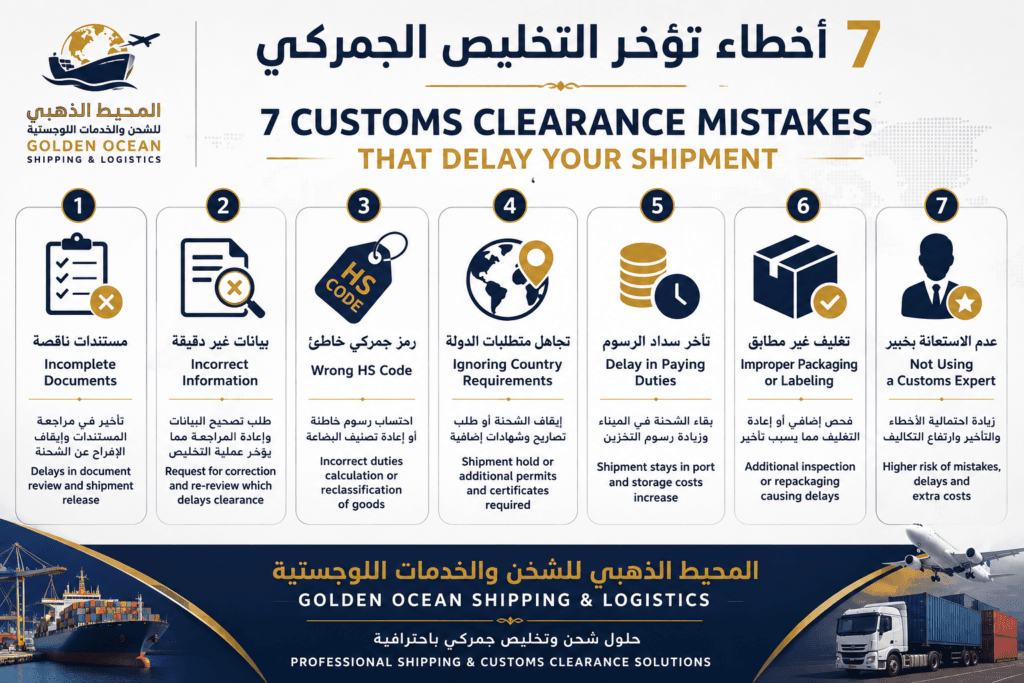
Mistake 1: Submitting Incomplete Shipping Documents
Incomplete documentation remains one of the leading causes of customs clearance delays worldwide.
Before customs authorities approve any shipment, they must verify that all required documents have been submitted correctly. Missing or incomplete paperwork often results in additional inspections and delayed cargo release.
The most commonly required shipping documents include:
- Commercial Invoice
- Packing List
- Bill of Lading or Air Waybill
- Certificate of Origin (when required)
- Import permits for regulated products
If even one of these documents is missing or contains incomplete information, customs officers may suspend the clearance process until the required documents are provided.
Besides delaying delivery, incomplete documentation can also increase warehousing and storage costs while the shipment remains at the port or airport.
How to Avoid This Mistake
Create a document checklist before shipping and verify every document carefully. Working with an experienced freight forwarder or customs clearance specialist allows you to identify missing information before the shipment reaches customs, reducing the risk of unnecessary delays.
Mistake 2: Providing Incorrect or Inconsistent Shipment Information
Even when all required documents are available, inaccurate or inconsistent information can still delay the customs clearance process.
Customs authorities carefully compare the details provided across every shipping document. Any discrepancy may trigger additional verification procedures before the shipment can be released.
Common examples include:
- Different importer or exporter names across documents
- Incorrect cargo weight or dimensions
- Mismatched package quantities
- Inaccurate product descriptions
- Errors in addresses or contact information
Although these mistakes may seem minor, they often require corrections and document resubmission, extending the customs clearance timeline.
How to Avoid This Mistake
Review every shipping document before submission and ensure that all information is consistent across the Commercial Invoice, Packing List, Bill of Lading, and any supporting documents.
Keeping digital copies of all documents also makes it easier to identify and correct inconsistencies before customs authorities begin their review.
Mistake 3: Using the Wrong HS Code
Every internationally traded product is classified under the Harmonized System (HS) Code, which determines customs duties, taxes, and import requirements.
Selecting the wrong HS Code is one of the most common customs clearance mistakes, especially for businesses shipping new products internationally.
Incorrect product classification may result in:
- Incorrect customs duty calculations
- Additional inspections
- Shipment reclassification
- Customs penalties
- Delayed cargo release
In some situations, customs authorities may request additional product information before determining the correct classification, causing further delays.
You can learn more about international product classification through the World Customs Organization (WCO) and its Harmonized System guidance.
The World Customs Organization (WCO) provides international standards for customs procedures and manages the Harmonized System (HS), helping traders classify goods correctly and improve customs compliance.
How to Avoid This Mistake
Always verify the correct HS Code before shipping your goods. If you’re unsure about the classification, consult an experienced customs clearance specialist who can help determine the appropriate code based on your product specifications.
Mistake 4: Ignoring the Import Requirements of the Destination Country
Every country has its own customs regulations, import restrictions, and documentation requirements.
A shipment that meets UAE export requirements may still face delays if it does not comply with the import regulations of the destination country.
Depending on the type of cargo, importers may be required to provide:
- Certificates of Origin
- Product conformity certificates
- Import licenses
- Health or safety certificates
- Special permits for restricted goods
Failure to provide these documents can prevent customs authorities from releasing the shipment until all requirements have been fulfilled.
Practical Example
Imagine exporting electrical equipment to a country that requires a product conformity certificate. If the shipment arrives without this document, customs authorities may place the cargo on hold until the certificate is submitted, increasing both storage costs and delivery time.
For the latest customs regulations in the UAE, importers and exporters should regularly consult the Federal Authority for Identity, Citizenship, Customs & Port Security (ICP).
How to Avoid This Mistake
Research the destination country’s import regulations before shipping your cargo and confirm that every required certificate or permit has been prepared in advance.
Mistake 5: Delaying Customs Duty Payments
After customs authorities complete their document review, import duties and taxes must usually be paid before the shipment can be released.
Many shipments remain at ports or airports simply because customs payments are delayed.
This often leads to:
- Storage charges
- Demurrage fees
- Delivery delays
- Increased logistics costs
For businesses working with tight delivery schedules, even a short payment delay can affect customer satisfaction and disrupt supply chain operations.
How to Avoid This Mistake
Estimate customs duties before your shipment arrives and ensure that payment arrangements are ready in advance.
Working closely with your customs broker or logistics provider helps prevent unnecessary delays caused by pending customs payments.
Mistake 6: Poor Packaging and Incorrect Labeling
Many businesses focus on preparing shipping documents while overlooking the importance of proper packaging and product labeling. However, these elements play a significant role in the customs clearance process.
Some countries require imported goods to meet specific packaging standards or display mandatory information on the product or shipping cartons. Missing labels or improper packaging may result in additional inspections or requests for corrective action before customs clearance can be completed.
Depending on the type of cargo, customs authorities may require labels showing:
- Country of origin
- Product identification
- Handling instructions
- Safety information
- Manufacturing details
Improper packaging can also increase the risk of cargo damage during transportation, leading to insurance claims, customer complaints, and higher logistics costs.
How to Avoid This Mistake
Before shipping your goods, confirm the packaging and labeling requirements of the destination country. Using high-quality packaging materials and ensuring that all required labels are clearly visible can help prevent unnecessary customs delays.
Mistake 7: Not Working with an Experienced Customs Clearance Partner
Some importers attempt to manage customs procedures on their own to reduce costs. While this may seem practical for small shipments, lack of experience often results in avoidable customs clearance mistakes that cost far more in the long run.
A professional customs clearance partner does much more than submit paperwork. They review shipping documents, verify product classifications, communicate with customs authorities, monitor shipment progress, and resolve issues before they become costly problems.
Their expertise helps businesses minimize delays, reduce compliance risks, and keep international shipments moving efficiently.
How to Avoid This Mistake
Choose a logistics company with proven experience in customs clearance and international freight. An experienced customs specialist can identify potential issues before your shipment reaches customs, saving valuable time and money.
Quick Reference Guide
| Customs Clearance Mistake | Possible Impact | Best Solution |
|---|---|---|
| Incomplete documents | Shipment delays | Verify all required paperwork before shipping |
| Incorrect shipment information | Additional document review | Ensure all shipping documents match exactly |
| Wrong HS Code | Incorrect duties and customs delays | Verify product classification carefully |
| Ignoring destination regulations | Cargo held by customs | Review import requirements before shipping |
| Late customs duty payment | Storage charges and delayed release | Prepare payments before shipment arrival |
| Poor packaging or labeling | Additional inspection | Follow packaging and labeling standards |
| Lack of professional customs support | Increased risk of costly errors | Work with an experienced customs clearance company |
How to Avoid Customs Clearance Mistakes
Although customs regulations vary from one country to another, most customs clearance mistakes can be prevented by following a few essential best practices.
- Prepare all shipping documents before dispatching the cargo
- Verify that every document contains accurate and consistent information
- Use the correct HS Code for every product
- Understand the import regulations of the destination country
- Arrange customs duty payments in advance
- Follow packaging and labeling requirements
- Work with an experienced customs clearance and logistics provider
Taking these preventive measures significantly improves the efficiency of the customs clearance process while reducing unexpected costs and shipment delays.
When Should You Hire a Customs Clearance Expert?
Professional customs assistance becomes especially valuable in situations such as:
- Importing goods for the first time
- Exporting commercial products internationally
- Shipping heavy equipment or machinery
- Handling high-value cargo
- Importing regulated or restricted products
- Managing time-sensitive shipments
An experienced customs clearance specialist understands local regulations, prepares accurate documentation, and helps ensure that your shipment moves through customs as efficiently as possible.
How Golden Ocean Shipping Can Help
At Golden Ocean Shipping & Logistics, we provide comprehensive customs clearance solutions for businesses and individuals across the UAE.
Our experienced team carefully reviews shipping documents, verifies customs requirements, coordinates with the relevant authorities, and manages every stage of the customs clearance process to help minimize delays and avoid unnecessary costs.
Whether you are importing, exporting, or managing international supply chains, we deliver reliable logistics solutions designed to keep your shipments moving efficiently.
Conclusion
Customs clearance is one of the most important stages of international shipping, and even small mistakes can lead to unnecessary delays, additional expenses, and operational disruptions.
By understanding the most common customs clearance mistakes, preparing accurate documentation, complying with import regulations, and working with experienced logistics professionals, businesses can significantly improve shipping efficiency while reducing customs-related risks.
International trade best practices promoted by the World Trade Organization (WTO) also encourage transparent customs procedures and efficient cross-border trade.
Investing time in proper preparation today can save both time and money throughout your international shipping operations.
Need Professional Customs Clearance Support?
Avoid costly customs clearance mistakes by partnering with experienced logistics professionals.
Golden Ocean Shipping & Logistics offers reliable customs clearance, sea freight, air freight, road freight, warehousing, and international shipping solutions tailored to your business needs.
📞 Contact us today for a free consultation or request a customized shipping quote, and let our experts handle your customs clearance with confidence.
Read Also
- Customs Clearance in the UAE: Complete Guide
- Customs Duties in the UAE: Everything You Need to Know
- Required Documents for International Shipping from the UAE
- International Shipping Costs from the UAE
- How to Choose the Best Shipping Company in the UAE
Frequently Asked Questions
What is the most common customs clearance mistake?
Incomplete or inaccurate shipping documents remain the leading cause of customs clearance delays worldwide.
Can an incorrect HS Code delay my shipment?
Yes. Using the wrong HS Code may result in additional inspections, incorrect duty calculations, and shipment delays.
Do customs regulations differ from one country to another?
Absolutely. Every country has its own import regulations, documentation requirements, and customs procedures.
Can a customs clearance specialist speed up the process?
Yes. An experienced customs specialist helps prepare accurate documentation, ensures regulatory compliance, and resolves issues before they delay your shipment.
How can I reduce customs clearance delays?
Prepare complete documentation, verify shipment information, classify products correctly, comply with destination-country regulations, and work with an experienced customs clearance provider.