

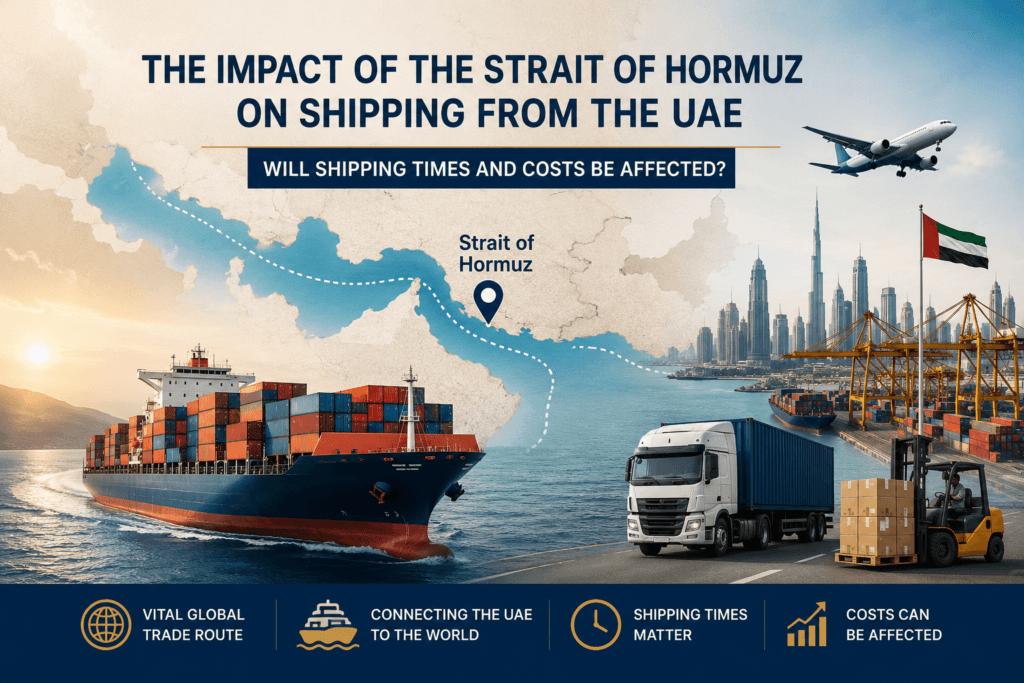
Impact of the Strait of Hormuz on Shipping from the UAE
The impact of the Strait of Hormuz on shipping from the UAE is an important topic for importers, exporters, and businesses involved in international trade. As one of the world’s most strategic maritime routes, the Strait plays a significant role in connecting the Arabian Gulf with global markets and supporting international supply chains.
The United Arab Emirates has established itself as a leading logistics hub through world-class ports, advanced transportation infrastructure, and efficient supply chain solutions. However, operational changes affecting major shipping routes may influence shipping schedules, transit times, and freight costs depending on several factors, including the destination, shipping method, carrier policies, and market conditions.
This guide explains the importance of the Strait of Hormuz, how it relates to shipping from the UAE, what factors may affect transit times and shipping costs, and how businesses can plan their shipments more effectively while remaining focused on logistics rather than political developments.
In This Guide, You’ll Learn
- Why the Strait of Hormuz is one of the world’s most important shipping routes
- How the Strait of Hormuz relates to shipping from the UAE
- Whether all shipping methods are affected equally
- Factors that may influence shipping times and freight costs
- How logistics companies prepare for operational changes
- Practical tips for importers and exporters
- How Golden Ocean supports reliable international shipping
Table of Contents
What Is the Strait of Hormuz?
The Strait of Hormuz is a narrow waterway connecting the Arabian Gulf to the Gulf of Oman and the Arabian Sea. It serves as one of the world’s busiest maritime corridors, enabling cargo vessels, container ships, and energy carriers to reach international markets across Asia, Europe, and Africa.
Because a significant volume of global maritime trade passes through this route, the Strait is considered a critical component of international logistics and global supply chains.
For the UAE, the Strait of Hormuz supports maritime connectivity with international shipping lanes, helping facilitate exports and imports through the country’s modern ports and logistics infrastructure.
For more information about international maritime safety standards, visit the International Maritime Organization (IMO)
Why Is the Strait of Hormuz Important for Shipping from the UAE?
The UAE has become one of the Middle East’s leading logistics centers thanks to its advanced ports, airports, free zones, and integrated transportation network.
Many international shipping routes operate through or around the Strait of Hormuz, making it an important part of regional maritime logistics. When operational conditions change, shipping companies may adjust sailing schedules, optimize routes, or implement contingency plans to maintain efficient cargo movement.
This does not necessarily mean that all shipments experience delays. The actual impact depends on multiple variables, including vessel schedules, destination ports, cargo type, and the operational decisions made by shipping lines.
As a result, experienced logistics providers continuously monitor shipping conditions and coordinate with international carriers to minimize disruptions whenever possible.
Why Doesn’t Every Shipment Experience the Same Impact?
One common misconception is that every shipment leaving the UAE is affected in exactly the same way whenever operational conditions change.
In reality, shipping performance depends on several factors, including:
- Shipping method
- Destination country
- Selected shipping line
- Port operations
- Cargo priority
- Vessel scheduling
- Seasonal shipping demand
Because these factors vary from one shipment to another, transit times and freight costs may differ even for cargo traveling to similar destinations.
Can Shipping Times and Costs Be Affected?
Shipping operations are influenced by a combination of operational, commercial, and logistical factors rather than a single event. Depending on market conditions and carrier decisions, some shipments may experience schedule adjustments while others continue according to their planned transit times.
Similarly, freight costs may fluctuate based on shipping demand, fuel prices, insurance costs, port operations, and vessel availability.
For this reason, businesses should evaluate shipping conditions as part of their logistics planning instead of relying on assumptions or isolated events.
Factors That May Influence Shipping Times
Several operational factors can affect transit schedules, including:
- Vessel scheduling adjustments
- Port congestion
- Changes in shipping routes
- Increased waiting times at ports
- Seasonal demand for freight services
The actual impact varies from one shipment to another depending on destination and carrier operations.
Factors That May Influence Freight Costs
Freight rates may change due to:
- Fuel prices
- Marine insurance costs
- Container availability
- Port handling charges
- Market demand for shipping services
Since freight pricing is influenced by multiple variables, transportation costs should always be confirmed before shipment planning.
Shipping Comparison
| Shipping Method | Possible Operational Impact | Typical Situation |
|---|---|---|
| Sea Freight | Moderate depending on shipping schedules | May experience timetable adjustments |
| Air Freight | Usually limited | Airlines operate under different logistics networks |
| Road Freight | Generally low | Mostly depends on border procedures and regional transportation |
Sea freight remains the most suitable option for large-volume cargo, while air freight is preferred for urgent shipments requiring faster delivery.
How Do Logistics Companies Respond to Operational Changes?
Professional logistics providers continuously monitor shipping conditions and work closely with shipping lines, port authorities, and transportation partners to maintain efficient cargo movement.
When operational changes occur, logistics companies may:
- Monitor vessel schedules in real time
- Coordinate with international shipping lines
- Adjust shipment planning when necessary
- Recommend alternative logistics solutions
- Keep customers informed throughout the shipping process
- Optimize transportation plans to minimize delays whenever possible
These practices help businesses maintain supply chain continuity while improving shipment visibility and planning.
Does the UAE Have Alternative Logistics Capabilities?
The United Arab Emirates has invested heavily in developing one of the world’s most advanced logistics ecosystems. Modern ports, international airports, free zones, and integrated transportation networks provide businesses with greater flexibility when planning international shipments.
When operational conditions affect certain shipping routes, logistics providers evaluate available transportation options based on cargo type, destination, and customer requirements.
The UAE’s strong logistics infrastructure enables freight forwarders to coordinate efficiently with international carriers, helping businesses maintain reliable cargo movement and reduce operational risks whenever possible.
As a result, companies shipping from the UAE benefit from a well-developed logistics environment designed to support international trade under a wide range of operating conditions.
Learn more about customs and trade services through the UAE Federal Authority for Identity, Citizenship, Customs and Port Security
How Golden Ocean Supports Your International Shipping Needs
At Golden Ocean, we understand that reliable logistics require careful planning, professional coordination, and continuous shipment monitoring.
Our experienced team provides customized freight solutions designed to support businesses and individuals shipping cargo worldwide.
Our services include:
- Sea Freight
- Air Freight
- Road Freight
- Customs Clearance
- Warehousing and Storage
- Freight Forwarding
- Cargo Tracking
- Logistics Consultation
We work closely with trusted international carriers to help customers choose the most suitable shipping solution based on cargo type, destination, budget, and delivery requirements.
Need Reliable International Shipping from the UAE?
Whether you’re shipping commercial goods, industrial equipment, or personal cargo, Golden Ocean offers reliable logistics solutions tailored to your business needs.
Contact our team today for a free consultation or request a customized shipping quotation, and let our logistics experts help you plan your next shipment with confidence.
Conclusion
The Strait of Hormuz remains one of the world’s most important maritime corridors and plays a significant role in supporting international trade and shipping from the UAE.
While operational changes may influence certain shipping activities, their impact varies depending on shipping methods, destinations, carrier decisions, and overall market conditions.
Businesses can improve supply chain resilience by planning shipments early, working with experienced logistics providers, and staying informed about operational developments.
Choosing a trusted freight forwarding partner helps ensure efficient cargo movement and greater flexibility in today’s dynamic global shipping environment.
Read Also
- Air Freight vs Sea Freight: Which Shipping Method Is Right for Your Cargo?
- Shipping Time from the UAE to Different Countries
- How to Calculate Shipping Costs from the UAE
- Required Documents for International Shipping from the UAE
- Best Shipping Company in the UAE: 10 Factors to Consider
Frequently Asked Questions
Does the Strait of Hormuz affect every shipment from the UAE?
No. The impact depends on several factors, including the shipping method, destination, carrier schedules, cargo type, and operational conditions.
Can shipping costs increase because of operational changes?
Freight rates may fluctuate depending on fuel prices, insurance costs, shipping demand, port operations, and other market factors.
Is air freight affected in the same way as sea freight?
Not necessarily. Air freight operates through a different transportation network, so its operational conditions and scheduling are generally different from maritime shipping.
How can businesses reduce the risk of shipping delays?
Planning shipments in advance, preparing documentation early, choosing experienced logistics providers, and maintaining regular communication with the freight forwarder can help improve shipping efficiency.
Does Golden Ocean provide international shipping services?
Yes. Golden Ocean offers comprehensive logistics solutions, including sea freight, air freight, road freight, customs clearance, warehousing, and freight forwarding services for businesses and individuals worldwide.
Last Updated
Last Updated: July 2026
This article is reviewed and updated periodically to ensure that the information remains accurate, relevant, and aligned with current international shipping practices.
Follow Golden Ocean
Stay updated with the latest shipping news, logistics insights, and international freight solutions by following our official social media channels.